
Follow Highlands Nursing and Rehabilitation on Facebook! Click Here

To see a list of frequently asked questions please Click Here

Highlands | Nursing & Rehabilitation

Latest News

Latest News

Providing Care and Comfort at the End of Life

July 20, 2026

Not all end-of-life experiences are alike. Death can come suddenly, or a person may linger in a near-death state for days. For some older adults at the end of life, the body weakens while the mind stays clear. Others remain physically strong while cognitive function declines. It’s common to wonder what happens when someone is dying. You may want to know how to provide comfort, what to say, or what to do.

In this article, you will read about ways to help provide care and comfort to someone who is dying. Such care often involves a team: Always remember to check with the person’s health care team to make sure these suggestions are appropriate for the situation.

What is end-of-life care?

End-of-life care is the term used to describe the support and medical care given during the time surrounding death. This type of care does not happen only in the moments before breathing ceases and the heart stops beating. Older people often live with one or more chronic illness and need significant care for days, weeks, and even months before death.

The end of life may look different depending on the person’s preferences, needs, or choices. Some people may want to be at home when they die, while others may prefer to seek treatment in a hospital or facility until the very end. Many want to be surrounded by family and friends, but it’s common for some to slip away while their loved ones aren’t in the room. When possible, there are steps you can take to increase the likelihood of a peaceful death for your loved one, follow their end-of-life wishes, and treat them with respect while they are dying.

Generally speaking, people who are dying need care in four areas: physical comfortmental and emotional needsspiritual needs, and practical tasks. Of course, the family of the dying person needs support as well, with practical tasks and emotional distress.

End of life: Providing physical comfort

Discomfort during the dying process can come from a variety of sources. Depending on the cause of the discomfort, there are things you or a health care provider can do to help make the dying person more comfortable. For example, the person may be uncomfortable because of:

  • Pain
  • Breathing problems
  • Skin irritation, including itching
  • Digestive problems
  • Temperature sensitivity
  • Fatigue

Pain. Not everyone who is dying experiences pain. For those who do, experts believe that care should focus on relieving pain without worrying about possible long-term problems of drug dependence or abuse.

Struggling with severe pain can be draining and make the dying person understandably angry or short-tempered. This can make it even harder for families and other loved ones to communicate with the person in a meaningful way.

Caregivers and other family members can play significant roles in managing a dying person’s pain. But knowing how much pain someone is in can be difficult. Watch for clues, such as trouble sleeping, showing increased agitation, or crying. Don’t be afraid of giving as much pain medicine as is prescribed by the doctor.

Pain is easier to prevent than to relieve, and severe pain is hard to manage. Try to make sure that the level of pain does not get ahead of pain-relieving medicines. Tell the health care professionals if the pain is not controlled because medicines can be increased or changed. Palliative medical specialists are experienced in pain management for seriously ill patients; consider consulting with one if they’re not already involved (see What Are Palliative Care and Hospice Care?).

Breathing problems. Shortness of breath or the feeling that breathing is difficult is a common experience at the end of life. The doctor might call this dyspnea. To help ease breathing for your loved one, try raising the head of the bed, opening a window, using a humidifier, or using a fan to circulate air in the room. Sometimes, morphine or other pain medications can help relieve the sense of breathlessness.

There may be times when a dying person has an abnormal breathing pattern, known as Cheyne-Stokes breathing. The person’s breathing may alternate between deep, heavy breaths and shallow or even no breaths. Some people very near death might have noisy breathing, sometimes called a death rattle. In most cases, this noisy breathing does not upset the dying person, though it may be alarming to family and friends. You may try turning the person to rest on one side or elevating their head. Prescription medicine may also help.

Skin irritation. Skin problems can be very uncomfortable for someone when they are dying. Keep the person’s skin clean and moisturized. Gently apply alcohol-free lotion to relieve itching and dryness.

Dryness on parts of the face, such as the lips and eyes, can be a common cause of discomfort near death. These tips may help:

  • Keep their lips moist with lip balm and their mouth clean with a soft, damp cloth.
  • Gently dab an eye cream or gel around the eyes.
  • Try placing a damp cloth over the person’s closed eyes.
  • If the inside of the mouth seems dry, giving ice chips (if the person is conscious) or wiping the inside of the person’s mouth with a damp cloth, cotton ball, or specially treated swab might help.

Sitting or lying in one position can put constant pressure on sensitive skin, which can lead to painful bed sores (sometimes called pressure ulcers). When a bed sore first forms, the skin gets discolored or darker. Watch carefully for these discolored spots, especially on the heels, hips, lower back, and back of the head.

Turning the person in bed every few hours may help prevent bed sores and stiffness. Try putting a foam pad under the person’s heel or elbow to raise it off the bed and reduce pressure. Ask a member of your health care team if a special mattress or chair cushion might also help.

Digestive problems. Nausea, vomiting, constipation, and loss of appetite are common issues at the end of life. Swallowing may also be a problem. The causes and treatments for these symptoms vary, so talk to a doctor or nurse about what you’re seeing. Medicines can control nausea or vomiting or relieve constipation, all of which are common side effects of strong pain medications.

If the person loses their appetite, try gently offering favorite foods in small amounts. Serve frequent, smaller meals rather than three larger ones. Help with feeding if the person wants to eat but is too tired or weak.

But don’t force a dying person to eat. Losing one’s appetite is a common and normal part of dying. Going without food and/or water is generally not painful, and eating and drinking can add to a dying person’s discomfort. A conscious decision to give up food can be part of a person’s acceptance that death is near.

Temperature sensitivity. When a person is closer to death, their hands, arms, feet, or legs may be cool to the touch. Some parts of the body may become darker or blueish. People who are dying may not be able to tell you that they are too hot or too cold, so watch for clues. For example, someone who is too warm might repeatedly try to remove a blanket. You can remove the blanket and place a cool cloth on the person’s head.

Hunching their shoulders, pulling the covers up, and shivering can be signs the person is cold. Make sure there is no draft, raise the heat, and add another blanket. Avoid electric blankets because they can get too hot.

Fatigue. It is common for people nearing the end of life to feel tired and have little or no energy. Keep things simple. For example, a bedside commode can be used instead of walking to the bathroom. Providing a stool so the person can sit in the shower, or sponge baths in bed can also help.

End of life: Managing mental and emotional needs

End-of-life care can also include helping the dying person manage mental and emotional distress. Someone who is alert near the end of life might understandably feel depressed or anxious. It is important to treat emotional pain and suffering. You might want to contact a counselor, possibly one familiar with end-of-life issues, to encourage conversations about feelings. Medicine may help if the depression or anxiety is severe.

The dying person may also have some specific fears and concerns. He or she may fear the unknown, or worry about those left behind. Some people are afraid of being alone at the very end. These feelings can be made worse by the reactions of family, friends, and even the medical team. For example, family and friends may not know how to help or what to say, so they stop visiting, or they may withdraw because they are already grieving. Doctors may feel helpless and avoid dying patients because they cannot help them further.

And some people may experience mental confusion and may have strange or unusual behavior, making it harder to connect with their loved ones. This can add to a dying person’s sense of isolation.

Here are a few tips that may help manage mental and emotional needs:

  • Provide physical contact. Try holding hands or a gentle massage.
  • Set a comforting mood. Some people prefer quiet moments with fewer people. Use soft lighting in the room.
  • Play music at a low volume. This can help with relaxation and lessen pain.
  • Involve the dying person. If the person can still communicate, ask them what they need.
  • Be present. Visit with the person. Talk or read to them, even if they can’t talk back. If they can talk, listen attentively to what they have to say without worrying about what you will say next. Your presence can be the greatest gift you can give to a dying person.

Spiritual needs at the end of life

For people nearing the end of life, spiritual needs may be as important as their physical concerns. Spiritual needs may include finding meaning in one’s life, ending disagreements with others, or making peace with life circumstances. The dying person might find comfort in resolving unsettled issues with friends or family. Visits from a social worker or a counselor may help.

Many people find solace in their faith. Others may struggle with their faith or spiritual beliefs. Praying, reading religious texts, or listening to religious music may help. The person can also talk with someone from their religious community, such as a minister, priest, rabbi, or imam.

Family and friends can talk to the dying person about the importance of their relationship. For example, adult children may share how their father has influenced the course of their lives. Grandchildren can let their grandfather know how much he has meant to them. Friends can share how they value years of support and companionship. Family and friends who can’t be present in person can send a video or audio recording of what they would like to say, or a letter to be read out loud.

Sharing memories of good times is another way some people find peace near death. This can be comforting for everyone. Some doctors think that dying people can still hear even if they are not conscious. Always talk to, not about, the person who is dying. When you come into the room, identify yourself to the person. You may want to ask someone to write down some of the things said at this time — both by and to the person who is dying. In time, these words might serve as a source of comfort to family and friends.

There may come a time when a dying person who has been confused suddenly seems to be thinking clearly. Take advantage of these moments but understand that they are likely temporary and not necessarily a sign of getting better. Sometimes, a dying person may appear to see or talk to someone who is not there. Resist temptation to interrupt or correct them, or say they are imagining things. Give the dying person the space to experience their own reality. Sometimes dying people will report having dreams of meeting deceased relatives, friends, or religious figures. The dying person may have various reactions to such dreams, but often, they are quite comforting to them.

Providing support for practical tasks

Many practical jobs need to be done at the end of life — both to relieve the person who is dying and to support the caregiver. A person who is dying might be worried about who will take care of things when they are gone. A family member or friend can offer reassurance — “I’ll make sure your African violets are watered,” “Jessica has promised to take care of Bandit,” “Dad, we want Mom to live with us from now on” — which may help provide a measure of peace. You also may remind the dying person that their personal affairs are in good hands.

Everyday tasks can also be a source of worry for someone who is dying and can overwhelm a caregiver. A family member or friend can provide the caregiver with a much-needed break by helping with small daily chores around the house such as picking up the mail, writing down phone messages, doing a load of laundry, feeding the family pet, or picking up medicine from the pharmacy.

Caregivers may also feel overwhelmed keeping close friends and family informed. A family member or friend can help set up an outgoing voicemail message, a blog, an email list, a private Facebook page, or even a phone tree to help reduce the number of calls the caregiver must make. Listed at the end of this article are some organizations that make setting up such resources easy and secure.

Providing comfort and care for someone at the end of life can be physically and emotionally exhausting. If you are a primary caregiver, ask for help when you need it and accept help when it’s offered. Don’t hesitate to suggest a specific task to someone who offers to help. Friends and family are usually eager to do something for you and the person who is dying, but they may not know what to do.

In the end, consider that there may be no “perfect” death so just do the best you can for your loved one. The deep pain of losing someone close to you may be softened a little by knowing that, when you were needed, you did what you could.

To learn more, please visit https://www.nia.nih.gov/health/end-life/providing-care-and-comfort-end-life.

Osteoarthritis

July 13, 2026

Osteoarthritis is the most common form of arthritis among older adults. It is also one of the most common causes of physical disability among adults.

Osteoarthritis is a degenerative joint disease that happens when the tissues that cushion the ends of the bones within the joints break down over time. These changes usually develop slowly and worsen gradually, causing pain, stiffness, and swelling. In some cases, people living with this disease are no longer able to work or perform daily tasks.

There is no way to reverse osteoarthritis, but the symptoms of osteoarthritis can usually be managed with lifestyle changes and medications.

Who is at risk for osteoarthritis?

Anyone can get osteoarthritis, but it is more common as people age. Women are more likely than men to have osteoarthritis, especially after age 50. Other factors that may make it more likely to develop osteoarthritis include:

  • Overweight or obesity
  • History of injury or surgery to a joint
  • Overuse from repetitive movements of the joint
  • Joints that do not form correctly
  • Family history of osteoarthritis

Each of these risk factors can cause tissues within the joints to break down and lead to osteoarthritis. You can decrease your chances of developing osteoarthritis by changing the risk factors you can control.

Symptoms of osteoarthritis

Osteoarthritis symptoms range from stiffness and mild pain to persistent, severe joint pain. Common signs include swelling and tenderness, stiffness after getting out of bed, and a crunching feeling or sound of bone rubbing on bone. However, not everyone with osteoarthritis feels pain.

Osteoarthritis most commonly affects the hands, lower back, neck, and weight-bearing joints such as knees, hips, and feet. Osteoarthritis in any of these joints can lead to physical disability.

Hands. Osteoarthritis of the hands seems to run in families. If you have family members who have had osteoarthritis in their hands, you’re at greater-than-average risk of having it, too. Women are more likely than men to have osteoarthritis in the hands. For most women, it develops after menopause. When osteoarthritis involves the hands, small, bony knobs may appear on the end and middle joints (those closest to the nails) of the fingers. Fingers can become enlarged and gnarled, and they may ache or be stiff and numb. The base of the thumb joint also is commonly affected by osteoarthritis.

Knees. The knees are among the joints most commonly affected by osteoarthritis. Symptoms of knee osteoarthritis include stiffness, swelling, and pain, which make it hard to walk, climb, and get in and out of chairs and bathtubs. You may hear a grinding or scraping noise when walking or moving. Over time, the knee may start to buckle.

Hips. The hips are also a common site for osteoarthritis. As with knee osteoarthritis, symptoms of hip osteoarthritis include pain and stiffness of the joint. But sometimes pain is felt in the groin, inner thigh, buttocks, or knees. Osteoarthritis of the hip may limit the ability to move and bend, making daily activities such as dressing and putting on shoes a challenge.

Spine. Osteoarthritis of the spine may show up as stiffness and pain in the neck or lower back. In some cases, arthritis-related changes in the spine can cause pressure on the nerves where they exit the spinal column, resulting in weakness, tingling, or numbness of the arms and legs. In severe cases, these changes can even affect bladder and bowel function.

Regardless of how osteoarthritis affects an individual, over time, their daily activities may become difficult, such as going up stairs, getting on or off the toilet or in and out of a chair, gripping a pen, or walking across a parking lot. Pain and other symptoms of osteoarthritis may lead a person to feel depressed, get tired easily, or have trouble sleeping. Fortunately, there are treatments to help manage the symptoms.

How is osteoarthritis diagnosed?

To make a diagnosis of osteoarthritis, most health care providers use a combination of methods and tests. Your doctor may:

  • Ask about your symptoms and medical history
  • Perform a physical examination
  • Use X-rays and other imaging tests to look at your joints
  • Order laboratory tests to rule out other problems that could be causing your symptoms

If you have questions about your diagnosis, talk to your doctor. Your primary care provider may refer you to a rheumatologist, a doctor who specializes in arthritis and other related conditions.

Osteoarthritis treatment and pain management

There is no cure for osteoarthritis, therefore, doctors focus on treatments to ease your pain, help you move better, and stop the disease from getting worse. Treatment plans often include:

Exercise. A safe, well-rounded exercise program can reduce joint pain and stiffness and increase flexibility, muscle strength, and endurance. Try stretching and balance exercises as well as low-impact activities such as walking, cycling, swimming, or tai chi. Always talk with your doctor before starting a new exercise program. Remember to start slowly and take the time to adjust to a new level of activity.

Weight control. If you are affected by overweight or obesity, managing your weight can reduce stress on the joints, which may reduce pain, prevent more injury, and increase mobility.

Medication. Over-the-counter medications, including oral pain relievers and arthritis creams, can be helpful. Your doctor may also give you a prescription for a pill or inject a medication directly into the joint to reduce inflammation and pain.

Surgery. If other treatments are not helping and the joint damage is extensive, your doctor may suggest surgery. Surgeries that help treat osteoarthritis include osteotomy, which removes a small piece of bone to relieve pressure on the affected joint, and joint-replacement surgery, which removes a part or all of the damaged joint and replaces it with a plastic, metal, or ceramic joint.

Complementary therapy. Some research shows that complementary approaches, such as massage and acupuncture, may help relieve osteoarthritis pain. Before using other therapies, talk with your doctor about the best options for your treatment.

Take steps to help manage your pain and work toward a better quality of life:

  • Try heat and cold treatments to help reduce pain.
  • Use a cane or walker to help move around safely. Your doctor or therapist may suggest other devices to help with other daily activities, such as jar openers.
  • Practice good posture to reduce pressure on joints.
  • Make several trips and keep loads small when bringing in groceries and other purchases.
  • Avoid repetitive activities, such as bending at the waist, when possible.
  • Reach out online and in your community for support groups.

To learn more, please visit https://www.nia.nih.gov/health/osteoarthritis/osteoarthritis.

Diabetes in Older People

July 7, 2026

Diabetes is a serious disease that affects many older adults. Diabetes occurs when a person’s blood glucose, also called blood sugar, is too high. The good news is that you can take steps to delay or prevent type 2 diabetes, which is the most common form of the disease to develop in older adults. If you already have diabetes, there are ways to manage the condition and help prevent diabetes-related health problems.

What is diabetes?

Glucose is the body’s main source of energy. Our bodies can make glucose, and glucose also comes from the food we eat. To use glucose as energy, the body needs insulin, a hormone that helps glucose get into cells. If you have diabetes, your body may not make enough insulin, use insulin in the right way, or both. That can cause too much glucose to stay in the blood, which can cause health problems over time.

Types of diabetes

The main types of diabetes in older adults are type 1 and type 2:

  • Type 1 diabetes: In this form of diabetes, the body makes little or no insulin. Although older adults can develop type 1 diabetes, it begins most often in children and young adults, who then have diabetes for life. People with type 1 diabetes need to take insulin every day.
  • Type 2 diabetes: In this condition, the most common form of diabetes, the body’s cells don’t use insulin properly. It occurs most often in middle-aged and older adults, but it can also affect children. Your chance of developing type 2 diabetes is higher if you have risk factors such as overweight or obesity, an inactive lifestyle, a family history of diabetes, or a history of gestational diabetes (a type of diabetes that develops during pregnancy). People who are African American, American Indian, Asian American, Hispanic/Latino, or Pacific Islander also have a higher risk of developing type 2 diabetes than people from other backgrounds.

Prediabetes is a condition that occurs when glucose levels are higher than normal but not high enough to be diagnosed as diabetes. Millions of older Americans have prediabetes. Although people with prediabetes have a greater chance of developing type 2 diabetes, there are ways to help prevent or delay the disease. These include maintaining a healthy weight, exercising, having your glucose level checked regularly, and talking with your doctor about medications and lifestyle changes that may help reduce your risk.

Symptoms of diabetes

Symptoms of diabetes may include feeling tired, increased hunger or thirst, losing weight without trying, urinating often, and numbness or tingling in hands or feet. You may also get blurred vision and skin infections, and your body may heal more slowly from cuts and bruises.

In people with type 2 diabetes, symptoms often develop slowly and may go unnoticed for a long time. Some people with type 2 diabetes have no symptoms, and they only find out that they have the condition when other diabetes-related health problems develop.

Sometimes older adults dismiss the symptoms of diabetes as just part of “getting old,” but they can be signs of a serious problem. Talk with your doctor if you have any symptoms or are concerned about developing diabetes.

Tests for diabetes

If you have symptoms or risk factors for diabetes, it’s important to get tested. Getting an early diagnosis can help you manage your diabetes and may prevent health problems. Doctors use several blood tests to help diagnose diabetes:

  • The fasting plasma glucose test measures your blood glucose at a single point in time. Most of the time, your doctor will give you the test in the morning after you have fasted (had nothing to eat or drink except water) for at least eight hours.
  • The A1C test shows your average blood glucose level over the past three months. You can eat and drink before this test. The A1C test may not be accurate in people with certain other diseases and conditions, so your doctor may use other tests in addition to A1C to diagnose diabetes.
  • The random plasma glucose test also measures your blood glucose at a single point in time. It is given at any time during the day and does not require fasting.
  • The oral glucose tolerance test has two steps: first, your blood glucose level is tested after you have fasted overnight. Then you drink a sugary drink and have your blood glucose level tested again two hours later. if your glucose level is high, you may have diabetes.

If a blood test suggests you have diabetes, your doctor may do a second blood test to confirm the diagnosis.

Managing type 2 diabetes

A person with diabetes may need to manage the disease with lifestyle changes, medication, or both. Many people with type 2 diabetes can manage their blood glucose levels with diet and exercise alone. Others may need diabetes pills or insulin injections, along with medicines to manage other conditions like high blood pressure and high cholesterol. Ask your health care provider questions about your medications to make sure you understand how they work, how to take them, and what side effects may occur.

Managing your diabetes involves taking care of yourself each day. Your daily self-care plan to control your blood glucose may include:

  • Tracking your glucose levels. Very high blood glucose levels (called hyperglycemia) or very low blood glucose levels (called hypoglycemia) can put your health at risk. Your plan will show how often you should check your glucose and how often to get the A1C test. If you are managing your diabetes without taking insulin, you may not need to check your glucose as often.
  • Making healthy food choices. The food you eat affects blood glucose levels, so it’s important to learn what’s best for you to eat, how much, and when. Work with your health care team to manage your weight and to lose weight if necessary.
  • Being active. Walking and other forms of daily exercise can help improve glucose levels in older people with diabetes. Set a goal to be active most days of the week and create a fitness plan that fits your schedule and abilities. Your health care team can help.
  • Taking your medicines. You should take medicines as prescribed even when you feel good. Tell your doctor if you have any side effects or cannot afford your medicines. Also, let your doctor know if you have trouble taking your medicines or keeping track of your medication schedule.

Diabetes can affect many parts of your body. If diabetes is untreated or poorly managed, it can cause serious health problems over time, such as damage to the eyes, kidneys, nerves, feet, and heart. People with type 2 diabetes may also be at greater risk for cancer, depression, and dementia. Here are more strategies to stay as healthy as possible with diabetes:

  • Manage your blood pressure. Get your blood pressure checked often. High blood pressure increases the risk for heart disease and can damage the eyes and kidneys.
  • Manage your cholesterol. At least once a year, get a blood test to check your cholesterol and triglyceride levels. High levels may increase your risk for heart problems.
  • Stop smoking. Smoking raises your risk for many health problems, including heart attack and stroke. If you smoke, take steps to quit.
  • Have yearly eye exams. Finding and treating eye problems early can help keep your eyes healthy.
  • Check your kidneys yearly. Because diabetes can affect your kidneys, getting recommended urine and blood tests will show if your kidneys are healthy.
  • Get flu shots every year and the pneumonia vaccine. A yearly flu shot will help keep you healthy. If you’re over 65, make sure you have had the pneumonia vaccine. If you were younger than 65 when you had the pneumonia vaccine, you may need another one. Ask your doctor.
  • Care for your teeth and gums. Brush your teeth and floss daily. Have your teeth and gums checked twice a year by a dentist to avoid serious problems.
  • Protect your skin. Keep your skin clean and use skin moisturizers for dryness. Take care of minor cuts and bruises to prevent infections.
  • Check your feet. Keep your feet clean by washing them every day and help protect your feet from damage by wearing shoes and socks at all times. Take time to look at your feet every day for any red patches. Ask someone else to check your feet if you can’t. If you have sores, blisters, breaks in the skin, infections, or calluses, see a foot doctor, called a podiatrist.
  • Keep up with cancer screenings. Ask your doctor which screenings to get based on your age, sex, and other risk factors.
  • Be prepared. Ensure you always have several days’ worth of supplies on hand for testing and treating your diabetes in case of an emergency.
  • Talk with your doctor about your concerns. If you think you might need help with your management plan, are depressed, are worried about your memory, or have any other concerns, talk with your doctor. There may be ways to help.

When you visit your health care team, your providers will assess how well you are managing your diabetes. Your care plan may change, or you may need more information and support. A change in health, such as a new diagnosis or complication, or a change in care, such as going home from the hospital, may also lead to updates to your plan.

To learn more, please visit https://www.nia.nih.gov/health/diabetes/diabetes-older-people.

Alzheimer’s & Brain Awareness Month: How Is Alzheimer’s Disease Diagnosed?

June 30, 2026

Doctors use several methods and tools to help determine if a person with thinking or memory problems has Alzheimer’s disease. To diagnose Alzheimer’s, doctors may:

  • Ask the person experiencing symptoms, as well as a family member or friend, questions about overall health, use of prescription and over-the-counter medicines, diet, past medical problems, ability to carry out daily activities, and changes in behavior and personality.
  • Conduct tests of memory, problem solving, attention, counting, and language.
  • Order blood, urine, and other standard medical tests that can help identify other possible causes of the problem.
  • Administer a psychiatric evaluation to determine if depression or another mental health condition is causing or contributing to a person’s symptoms.
  • Collect cerebrospinal fluid (CSF) via a spinal tap and measure the levels of proteins associated with Alzheimer’s and related dementias.
  • Perform brain scans, such as computed tomography (CT), magnetic resonance imaging (MRI), or positron emission tomography (PET), to support an Alzheimer’s diagnosis or rule out other possible causes for symptoms.

Doctors may want to repeat these tests to help best determine how the person’s memory and other cognitive functions are changing over time. The tests can also help diagnose other causes of memory problems, such as stroke, tumor, Parkinson’s disease, sleep disturbances, side effects of medication, an infection, or another type of dementia. Some of these conditions may be treatable and possibly reversible.

People with memory problems should return to the doctor every six to 12 months.

Before the early 2000s, the only sure way to know whether a person had Alzheimer’s disease was through autopsy, a procedure that is performed after death. Thanks to advances in research, lab and imaging tests are now available to help a doctor or researcher see biological signs of the disease, or biomarkers, in a living person. For example, it is now possible for many doctors, dependent on state-specific availability reflecting U.S. Food and Drug Administration guidelines, to order a blood test to measure levels of beta-amyloid, a protein that accumulates abnormally in the brains of people with Alzheimer’s. Several other blood tests are in development. At present, blood test results alone should not be used to diagnose dementia but may be taken into consideration along with other tests. However, the availability of these diagnostic tests is still limited. NIA-supported research teams continue to study options for faster, less-expensive, and less-invasive ways to diagnose Alzheimer’s.

What happens if a doctor thinks it’s Alzheimer’s disease?

If a primary care doctor suspects Alzheimer’s, he or she may refer the patient to a specialist who can provide a detailed diagnosis or further assessment. Specialists include:

  • Geriatricians, who manage health care in older adults and know how the body changes as it ages and whether symptoms indicate a serious problem.
  • Geriatric psychiatrists, who specialize in the mental and emotional problems of older adults and can assess memory and thinking problems.
  • Neurologists, who specialize in abnormalities of the brain and central nervous system and can conduct and review brain scans.
  • Neuropsychologists, who can conduct tests of memory and thinking.

Memory clinics and centers, including Alzheimer’s Disease Research Centers, offer teams of specialists who work together to diagnose the problem. In addition, these specialty clinics or centers often have access to the equipment needed for brain scans and other advanced diagnostic tests.

What are the potential benefits of an early Alzheimer’s diagnosis?

Alzheimer’s disease slowly worsens over time. People living with this disease progress at different rates, from mild Alzheimer’s, when they first notice symptoms, to severe, when they are completely dependent on others for daily, routine care such as feeding oneself.

Early, accurate diagnosis may be beneficial to some people for several reasons. While there is no cure, medicines are emerging to treat the progression of Alzheimer’s. There are also medicines available to treat some symptoms of Alzheimer’s, along with coping strategies to manage behavioral issues. Most medicines currently available work best for people in the early or middle stages of the disease. Learn more about Alzheimer’s treatments.

In addition, having an early diagnosis helps people with Alzheimer’s and their families:

An early diagnosis can also provide people with more opportunities to participate in clinical trials or other research studies testing possible new treatments for Alzheimer’s.

To learn more, please visit https://www.nia.nih.gov/health/alzheimers-symptoms-and-diagnosis/how-alzheimers-disease-diagnosed.

Adapting Activities for People With Alzheimer’s Disease

June 22, 2026

People with Alzheimer’s need to be active and do things they enjoy. However, activities they used to enjoy may become challenging for them as the disease worsens. They may have trouble deciding what to do or starting tasks. As a caregiver, you can learn how to adapt activities to make them easier and more enjoyable.

General tips

Here are some ways to make activities easier and more enjoyable for a person with Alzheimer’s:

  • Match the activity with what the person with Alzheimer’s can do.
  • Choose activities that can be fun for everyone.
  • Help the person get started with the activity.
  • Decide if they can do the activity alone or need help.
  • Watch to see if the person gets frustrated.
  • Make sure they feel successful and have fun.
  • Let them simply watch if they seem to enjoy that more.
At home

To help keep days interesting and engaging for people with Alzheimer’s, try coming up with different activities to do each day. Here are some daily activities people with Alzheimer’s may enjoy:

  • Cooking and baking: Gather materials, measure ingredients, mix and pour, or tell someone else how to prepare a recipe.
  • Exercise: Take a walk together, use a stationary bike, use stretching bands, throw a soft ball or balloon back and forth, lift weights or household items such as soup cans, or follow along with exercise videos or programs for older adults.
  • Music and dancing: Play music, talk about the music and the artist, ask what the person with Alzheimer’s was doing when the song was popular, sing or dance to well-known songs, or attend a concert or musical program in the community.
  • Pets: Feed, groom, walk, or sit and hold a pet.
  • Gardening: Take care of indoor or outdoor plants, plant flowers and vegetables, water the plants when needed, or talk about how much the plants are growing.
  • Household chores: Wash dishes, set the table, prepare food, sweep the floor, dust, sort mail and clip coupons, sort socks and fold laundry, or sort recycling materials or other items.
  • Visiting with children: Play a simple board game, read stories or books, visit family members who have small children, walk in the park or near schools, or go to school events. If you don’t have children to visit, talk about fond memories from childhood.
Going out

Early in the disease, people with Alzheimer’s may still enjoy the same kinds of outings they enjoyed in the past. Keep going out as long as you both are comfortable. Plan outings for the time of day when the person is at their best. Keep your time away from home from becoming too long so the person with Alzheimer’s doesn’t get too tired. Some places your loved one might enjoy visiting include a:

  • Favorite restaurant
  • Zoo or aquarium
  • Park or nature trail
  • Shopping mall
  • Swimming pool (during a slow time of day at the pool)
  • Museum, theater, or art exhibits for short trips

The person with Alzheimer’s may also enjoy going to a senior center. This type of “going out” could also be considered a form of respite care because it provides an activity for the person with Alzheimer’s and gives the caregiver a break.

Eating at a restaurant

Going out to eat can be a welcome change, but it also poses some challenges. Below are some tips for eating out with a person who has Alzheimer’s:

  • Choose a restaurant that the person likes, is quiet, and has quick service and an understanding staff.
  • Visit restaurants during “off hours” when they’re less likely to be crowded.
  • Consider going to the restaurant earlier in the day so the person is not too tired. Bring supplies such as utensils, a towel, and wipes that the person uses at home.
  • At the restaurant, ask for a table near the bathroom.
  • Help the person choose their meal, if needed. Read parts of the menu or show the person a picture of the food. Suggest food you know the person likes.
  • Ask the server to fill glasses half full or leave the drinks for you to serve.
  • Order some finger food or appetizers before the main meal to hold the attention of the person with Alzheimer’s.
Traveling

Taking a person with Alzheimer’s on a trip can be a challenge because it may make the person more worried and confused. Below are some tips that you may find helpful.

  • Before you leave, talk with the person’s doctor about medicines to calm someone who gets upset while traveling.
  • Think about the person’s unique needs and preferences when choosing transportation, such as a plane, train, or car. Go with the option that provides the most comfort and least anxiety.
  • Pack an extra set of clothing and items they enjoy looking at or holding in a carry-on bag.
  • Talk to the person about travel plans in advance, but not too far ahead if traveling makes them feel anxious.
  • Do not plan too many activities, and plan rest periods.
  • During the trip, follow a routine like the one you use at home. Try to have the person eat, rest, and go to bed at the same time as usual.
  • Be prepared to cut your visit short if necessary.
  • In case the person with Alzheimer’s gets lost, make sure they wear or have something with them that tells who they are, such as an ID bracelet.
Spiritual activities

Being part of a faith community may help someone with Alzheimer’s feel connected to others and remember pleasant times. Here are some ideas to help:

  • Involve the person in spiritual activities that they have known well. These might include worship services, religious or other readings, sacred music, prayer, meditation, and holiday rituals.
  • Tell people in the preferred faith community about the person’s Alzheimer’s. Encourage them to talk with the person and show they still care.
  • Find worship services or readings online if the person is more comfortable at home.
Holidays

Caregivers of people with Alzheimer’s may worry about the extra demands that holidays make on their time and energy. Here are some suggestions to make holidays easier:

  • Understand that things will be different, and be realistic about what you can do.
  • Incorporate the holiday traditions of the person with Alzheimer’s.
  • Create a quiet space in case the person with Alzheimer’s needs a break. Have their favorite activities or calming music in that space.
  • Ask friends and family to visit. Limit the number of visitors at any one time.
  • Avoid crowds, changes in routine, and strange places that may make the person with Alzheimer’s feel confused or nervous.
  • Remember to enjoy yourself. Find time for the holiday activities you like to do. Ask a friend or family member to spend time with the person while you’re out.

To learn more, please visit https://www.nia.nih.gov/health/alzheimers-caregiving/adapting-activities-people-alzheimers-disease.

Coping With Alzheimer’s Behaviors: Rummaging and Hiding Things

June 16, 2026

Someone with Alzheimer’s disease may start rummaging or searching through cabinets, drawers, closets, the refrigerator, and other places where things are stored. They may also hide items around the house.

In some cases, there might be a logical reason for this behavior. For instance, they may be looking for something specific but not able to tell you what it is. They may be hungry or bored. Try to understand what is causing the behavior so you can fit your response to the cause.

Tips to make rummaging safer

You can take steps that allow the person with Alzheimer’s to rummage while keeping the person safe. Try these tips:

  • Lock up dangerous or toxic products or place them out of the person’s sight and reach.
  • Remove spoiled food from the refrigerator and cabinets. Someone with Alzheimer’s may look for snacks but lack the judgment or sense of taste to stay away from foods that have gone bad.
  • Remove valuable items that could be misplaced or hidden by the person, such as important papers, checkbooks, credit cards, jewelry, cellphones, and keys.
  • People with Alzheimer’s often hide, lose, or throw away mail. If this is a serious problem, consider getting a post office box. If you have a yard with a fence and a locked gate, place your mailbox outside the gate.

More tips to cope with rummaging and hiding

Here are some more suggestions to help manage rummaging and hiding behavior:

  • Keep the person with Alzheimer’s from going into any unused room. This limits their rummaging and hiding things.
  • Search the house to learn where the person often hides things. Once you find these places, check them often when out of sight of the person.
  • Keep all trash cans covered or out of sight. People with Alzheimer’s may not remember the purpose of the container or may rummage through it.
  • Check trash containers before you empty them in case something has been hidden there or thrown away by accident.

For more information

NIA Alzheimer’s and related Dementias Education and Referral (ADEAR) Center
800-438-4380
adear@nia.nih.gov
www.nia.nih.gov/alzheimers
The NIA ADEAR Center offers information and publications for download (PDF) about Alzheimer’s and related dementias for families, caregivers, and health professionals. ADEAR Center staff answer telephone, email, and written requests and make referrals to local and national resources.

Alzheimers.gov
www.alzheimers.gov
Explore the Alzheimers.gov website for information and resources on Alzheimer’s and related dementias from across the federal government.

Eldercare Locator
800-677-1116
eldercarelocator@USAging.org
https://eldercare.acl.gov

Alzheimer’s Association
800-272-3900 
866-403-3073 (TTY)
info@alz.org
www.alz.org 

Alzheimer’s Foundation of America
866-232-8484
info@alzfdn.org
https://alzfdn.org

Family Caregiver Alliance
800-445-8106
info@caregiver.org
www.caregiver.org

How Is Alzheimer’s Disease Treated?

June 10, 2026

Several prescription drugs are approved by the U.S. Food and Drug Administration (FDA) for Alzheimer’s disease to help either manage the symptoms of or to treat the disease. Most FDA-approved drugs work best for people in the early or middle stages of Alzheimer’s. There are currently no known interventions that will cure Alzheimer’s.

Medications for mild to moderate Alzheimer’s disease

Treating the symptoms of Alzheimer’s can help provide people with comfort, dignity, and independence for a longer period of time and also assist their caregivers. Galantamine, benzgalantamine, rivastigmine, and donepezil are cholinesterase inhibitors that are prescribed for mild to moderate Alzheimer’s symptoms. These drugs may help reduce or control some cognitive and behavioral symptoms.

Cholinesterase inhibitors prevent the breakdown of acetylcholine, a brain chemical believed to be important for memory and thinking. As Alzheimer’s progresses, the brain produces less acetylcholine and, over time, these medicines lose their effectiveness. Because cholinesterase inhibitors work in a similar way, switching from one to another may not produce significantly different results, but a person living with Alzheimer’s may respond better to one drug versus another.

Lecanemab and donanemab are FDA-approved immunotherapy drugs for the treatment of early Alzheimer’s. These drugs target the protein beta-amyloid to help reduce amyloid plaques, one of the hallmark brain changes in Alzheimer’s. Clinical studies to determine the effectiveness of  lecanemab and donanemab were conducted in people with early-stage Alzheimer’s or mild cognitive impairment due to the disease. These studies showed that the drugs slowed the rate of cognitive decline among some study participants over the course of 18 months and reduced the levels of amyloid in the brain. Currently, insurance may only cover these medications in specific situations. Medicare Part B covers part of the cost of these medications for patients who meet certain medical criteria.

Before prescribing lecanemab or donanemab, doctors may order PET scans or an analysis of cerebrospinal fluid to evaluate whether amyloid deposits are present in the brain. Possible side effects of these medications include amyloid-related imaging abnormalities (ARIA), which can lead to fluid buildup or bleeding in the brain. In rare instances, the side effects may be serious or life-threatening. Due to these potential risks, doctors should monitor for side effects with MRIs.

Several other medications to treat Alzheimer’s are being tested in people with mild cognitive impairment or early Alzheimer’s.

Medications for moderate to severe Alzheimer’s disease

A medication known as memantine, an N-methyl-D-aspartate (NMDA) antagonist, can be prescribed for moderate to severe Alzheimer’s. This drug is prescribed to decrease symptoms, which could enable some people to maintain certain daily functions a little longer than they would without the medication. For example, memantine may help a person in the later stages of the disease maintain their ability to use the bathroom independently for several more months, a benefit for both people with Alzheimer’s and their caregivers.

Memantine is believed to work by regulating glutamate, an important brain chemical. When produced in excessive amounts, glutamate may lead to brain cell death. Because NMDA antagonists work differently from cholinesterase inhibitors, the two types of drugs can be prescribed in combination.

The FDA has also approved donepezil, the rivastigmine patch, and a combination medication of memantine and donepezil for moderate to severe Alzheimer’s.

Brexpiprazole is an atypical antipsychotic that has been approved to treat agitation associated with Alzheimer’s. See below for more information on managing behavioral symptoms and antipsychotics.

Dosage and side effects of Alzheimer’s disease medications

Doctors usually start patients at low drug doses and gradually increase the dosage based on how well a patient tolerates it. There is some evidence that certain people may benefit from higher doses of Alzheimer’s medications. However, the higher the dose, the more likely unwanted side effects will occur.

Patients should be monitored when a drug is started. All of these medicines have possible side effects that may include nausea, vomiting, diarrhea, allergic reactions, loss of appetite, headaches, confusion, dizziness, and falls. Report any unusual symptoms to the prescribing doctor right away.

It is important to follow your doctor’s instructions when taking any medication, including vitamins and herbal supplements. Talk with your doctor before adding or changing any medications.

Managing behavioral symptoms of Alzheimer’s disease

Common behavioral symptoms of Alzheimer’s include sleeplessnesswanderingagitation, anxiety, aggression, restlessness, and depression. Scientists are learning why these symptoms occur and are studying new treatments — drug and non-drug — to manage them. Research has shown that treating behavioral symptoms can provide comfort for people with Alzheimer’s and make things easier for caregivers.

Experts agree that medicines to treat these behavior problems should be used only after other non-drug strategies have been tried. Learn more about behavioral changes in people with Alzheimer’s disease and ways to cope.

Medicines to be used with caution in people with Alzheimer’s disease

Some medicines, such as sleep aids, anti-anxiety drugs, anticonvulsants, and antipsychotics warrant extra caution for people living with Alzheimer’s. These drugs should only be considered as options after:

  • A doctor has explained all the risks and side effects of the medicine
  • Other, safer non-drug options have not helped treat the problem

People living with Alzheimer’s and their caregivers must watch for side effects from these medications.

Sleep aids are used to help people get to sleep and stay asleep. People with Alzheimer’s should not use these drugs regularly because they make the person more confused and more likely to fall. There are lifestyle changes people can make to improve their sleep. Learn more about getting a good night’s sleep.

Anti-anxiety drugs are used to treat agitation. Certain types of anti-anxiety drugs, such as benzodiazepines, can cause sleepiness, dizziness, falls, and confusion. For this reason, doctors recommend they only be used for short periods of time, if at all.

Anticonvulsants are drugs sometimes used to treat severe aggression. Side effects may cause sleepiness, dizziness, mood swings, and confusion.

Antipsychotics are drugs used to treat hallucinations, delusions, and paranoia, and agitation and aggression. Their side effects can be serious, including increased risk of death in some older people with dementia. These medications should only be given to people with Alzheimer’s when the doctor agrees the symptoms are severe.

The future of Alzheimer’s disease treatments

Alzheimer’s researchers continue to explore a variety of innovative approaches to treat symptoms as well as underlying disease processes. In ongoing clinical trials, they are developing and testing several new possible interventions. These include additional immunotherapy and other drug therapies, cognitive training, diet, and physical activity.

To learn more, please visit https://www.nia.nih.gov/health/alzheimers-treatment/how-alzheimers-disease-treated.

Alzheimer’s & Brain Awareness Month: Thinking About Your Risk for Alzheimer’s Disease? Five Questions To Consider

June 2, 2026

Ask yourself the five questions below to help understand your risk factors for developing Alzheimer’s disease.

How old are you?

Age is the biggest known risk factor for Alzheimer’s. Most people with Alzheimer’s develop the disease when they are 65 or older, with less than 10% of cases occurring before then. As a person ages past 65, their risk of Alzheimer’s increases. About one in 13 people age 65 to 84 and one in three people 85 and older are living with Alzheimer’s.

Does Alzheimer’s run in your family?

Family history is also an important risk factor. People with a parent or sibling diagnosed with Alzheimer’s have a higher risk of developing the disease than those who don’t have family members with the disease. Families can have many things in common, including their genes, environment, and lifestyle, that all may play a role. For example, lifestyle habits such as diet and exercise, which can be influenced by family, can affect overall health and increase risk for Alzheimer’s. Importantly, not everyone with a history of Alzheimer’s in their family will develop the disease and vice versa — not everyone who develops Alzheimer’s has a family history of the disease.

What’s your lifestyle?

There are some risk factors, like age, that you cannot change. However, there may be ways to promote better brain health and reduce your risk of Alzheimer’s by addressing certain lifestyle factors, including:

  • Unmanaged chronic health issues, such as high blood pressure or hearing loss
  • Physical inactivity
  • Unhealthy diet
  • Alcohol misuse
  • Smoking
  • Not getting enough sleep or not sleeping well
  • Social isolation
  • Lack of mental stimulation

Researchers cannot yet say for certain whether making positive changes in these areas can prevent dementia, but doing so is beneficial to living a healthier lifestyle overall. Learn more about leading a healthy lifestyle that may help address risk factors associated with Alzheimer’s and related dementias.

What medical conditions do you have?

Having certain medical conditions may increase your risk of developing Alzheimer’s. For example, cardiovascular disease, which includes conditions such as heart disease, stroke, and coronary artery disease, affects the heart and blood vessels and has been linked to Alzheimer’s.

Several risk factors associated with developing cardiovascular disease are also associated with Alzheimer’s. For example, studies have shown that managing high blood pressure reduces the risk of mild cognitive impairment and the risk of dementia. Specifically, one large clinical trial showed that lowering systolic blood pressure to below 120 mmHg reduced the risk of mild cognitive impairment, and a review of observational studies showed that managing high blood pressure with medication reduced the risk of dementia compared to people with high blood pressure who didn’t take medication. Learn more about blood pressure and Alzheimer’s and ways to control your blood pressure.

Other risk factors associated with both cardiovascular disease and Alzheimer’s include diabetesoverweight or obesity, and high LDL (“bad”) cholesterol.

In addition, other medical conditions associated with a higher risk of Alzheimer’s include:

Getting recommended health screenings and regularly checking in with a health care provider can help you learn about and manage medical conditions. Treat high blood pressure with healthy lifestyle changes and medications if prescribed by your doctor. Protect your ears from loud sounds and use hearing restorative devices, such as hearing aids, if needed. Make healthy food choices and get regular exercise to maintain a healthy weight.

What about biomarkers?

Biomarkers are characteristics we can measure that help show what’s happening inside the body. Scientists have identified several biomarkers associated with Alzheimer’s. While testing for biomarkers can provide some information about a person’s risk, these tests can’t tell for sure whether or not someone will develop the disease. Right now, many of these biomarkers are used mostly in research settings or to help doctors in diagnosing the disease.

Genetic variants are a type of biomarker that have been associated with Alzheimer’s risk. Variants in the apolipoprotein E (APOE) gene are one example. A variant called APOE ε4 has been associated with an increased risk of Alzheimer’s in certain populations, while a variant called APOE ε2 may offer some protection against Alzheimer’s in others.

At-home tests are available for a fee to test for APOE variants. People considering such tests will benefit from talking with a doctor or genetic counselor to better understand the test and what their results may mean. Learn more about Alzheimer’s and genetics.

Other biomarkers for Alzheimer’s include levels of the proteins beta-amyloid and tau. Doctors may use brain scans and cerebrospinal fluid tests that measure these protein levels to help determine whether a person’s cognitive difficulties are caused by Alzheimer’s or not. Blood tests are also now available that can measure levels of beta-amyloid. However, none of these tests are commonly used to indicate someone’s risk outside of a research setting.

Identifying who may or may not develop Alzheimer’s is complex. Researchers continue to investigate biomarkers and other risk factors for the disease. Learn more about biomarkers that help diagnose Alzheimer’s or a related dementia.

The bottom line

Scientists are still learning about what causes Alzheimer’s and what puts some people at higher risk than others. While we know some of the factors that influence a person’s risk, there are probably many other factors that have not yet been identified. Talk with a doctor if you have concerns or questions about your risk of developing the disease. The doctor may suggest changes in memory and thinking to watch out for. They may also recommend steps for staying healthy overall to help maintain cognitive health and reduce the risk of dementia.

To learn more, please visit https://www.nia.nih.gov/health/alzheimers-causes-and-risk-factors/thinking-about-your-risk-alzheimers-disease-five.

Brain Health: What is it and Why is it Important?

May 19, 2026

Brain health affects many aspects of life, including how you think, feel, act, and relate to others. Many factors can affect brain health, including age-related changes in the brain, injuries such as stroke, mood disorders, substance use disorder, and diseases such as Alzheimer’s.

What is brain health?

Brain health refers to how well a person’s brain functions across several areas.

  • Motor function: Controlling movements and balance
  • Sensory function: Seeing, hearing, tasting, and smelling
  • Tactile function: Feeling and responding to sensations of touch, including pressure, pain, and temperature
  • Cognitive health: Thinking, learning, and remembering
  • Emotional function: Interpreting and responding to emotions

Learn more about keeping your brain healthy as you age: www.nia.nih.gov/brain-health.

Sleep Habits for Older Adults

May 4, 2026

People spend about one-third of their life sleeping or trying to sleep. Being older doesn’t mean you have to be tired. Sleep is important for your body and affects your ability to function during the day. Below are some healthy habits that can help you fall and stay asleep. 

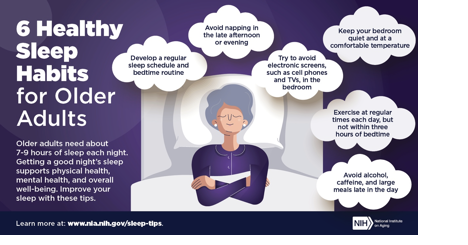
Older adults need about 7-9 hours of sleep each night. Getting a good night’s sleep supports physical health, mental health, and overall well-being. Improve your sleep with these tips.

Six Healthy Sleeping Habits for Older Adults
  1. Develop a regular sleep schedule and bedtime routine
  2. Avoid napping in the late afternoon or evening
  3. Try to avoid electronic screens, such as cell phones and TVs, in the bedroom
  4. Keep your bedroom quiet and at a comfortable temperature
  5. Exercise at regular times each day, but not within three hours of bedtime
  6. Avoid alcohol, caffeine, and large meals late in the day