Follow Highlands Nursing and Rehabilitation on Facebook! Click Here

To see a list of frequently asked questions please Click Here

Highlands | Nursing & Rehabilitation

Latest News

Latest News

Interim Infection Prevention and Control Recommends to Prevent SARS-CoV-2 Spread in Nursing Homes

November 22, 2021

Summary of Recent Changes

  • Updated outbreak response guidance to promote use of contact tracing approach. Alternative broad-based approaches to outbreak response at a facility-wide or unit level are also described.
  • Updated expanded screening testing recommendations for healthcare personnel (HCP).
  • Updated recommendations for quarantine of fully vaccinated residents.
  • Updated visitation guidance.

Key Points

  • Older adults living in congregate setting are at high risk of being affected by respiratory and other pathogens, such as SARS-CoV-2.
  • A strong infection prevention and control (IPC) program is critical to protect both residents and healthcare personnel (HCP).
  • Even as nursing homes resume normal practices, they must sustain core IPC practices and remain vigilant for SARS-CoV-2 infection among residents and HCP in order to prevent spread and protect residents and HCP from severe infections, hospitalizations, and death.

In general, healthcare facilities should continue to follow the IPC recommendations for unvaccinated individuals (e.g., use of Transmission-Based Precautions for those that have had close contact to someone with SARS-CoV-2 infection) when caring for fully vaccinated individuals with moderate to severe immunocompromise due to a medical condition or receipt of immunosuppressive medications or treatment.

Other factors, such as end-stage renal disease, likely pose a lower degree of immunocompromise and there might not be a need to follow the recommendations for those with moderate to severe immunocompromise. However, fully vaccinated people in this category should consider continuing to practice physical distancing and use of source control while in a healthcare facility.

Ultimately, the degree of immunocompromise for the patient is determined by the treating provider, and preventive actions are tailored to each individual and situation.

Infection Prevention and Control Program

Assign one or more individuals with training in infection control to provide on-site management of the IPC program.

  • This should be a full-time role for at least one person in facilities that have more than 100 residents or that provide on-site ventilator or hemodialysis services. Smaller facilities should consider staffing the IPC program based on the resident population are facility service needs identified in the IPC risk assessment.
  • CDC has created an online training course that can orient individuals to this role in nursing homes.

Provide supplies necessary to adhere to recommended IPC practices

  • Ensure HCP have access to all necessary supplies including alcohol-based hand sanitizer with 60-95% alcohol, personal protective equipment (PPE), and supplies for cleaning and disinfection.
    • Put FDA-approved alcohol-based hand sanitizer with 60-95% alcohol in every resident room (ideally both inside and outside of the room) and other resident care and common areas (e.g., outside dining hall, in therapy gym.)

Educate residents, HCP, and visitors about SARS-CoV-2, current precautions being taken in the facility, and actions they should take to protect themselves.

Vaccinations

Vaccinated residents and HCP against SARS-CoV-2

Source Control and Physical Distancing Measures

Refer to Interim Infection Control Recommendations for Healthcare Personnel During the COVID-19 Pandemic for details regarding source control and physical distancing measures recommended for vaccinated and unvaccinated HCP and residents.

Visitation

Have a plan for visitation

Additional information about visitation for nursing homes and intermediate care facilities for individuals with intellectual disabilities and psychiatric residential treatment facilities is available from CMS.

Personal Protective Equipment

Ensure proper use, handling and implementation of personal protective equipment

Testing

Create a plan for testing residents and HCP for SARS-CoV-2

  • Anyone with even mild symptoms of COVID-19, regardless of vaccination status, should receive a viral test as soon as possible.
  • Asymptomatic HCP with a higher-risk exposure and residents with close contact with someone with SARS-CoV-2 infection, regardless of vaccination status, should have a series of two viral tests for SARS-CoV-2 infection. In these situation, testing is recommended immediately (but not earlier than 2 days after exposure) and, if negative, again 5-7 days after the exposure. Criteria for use of post-exposure prophylaxis are described elsewhere.

Evaluating and Managing Personnel and Residents

Identify space in the facility that could be dedicated to monitor and care for residents with confirmed SARS-CoV-2 infection

  • Determine the location of the COVID-19 care unit and create a staffing plan.
  • The location of the COVID-19 care unit should ideally by physically separated from other rooms or units housing residents without confirmed SARS-CoV-2 infection. This could be a dedicated floor, unit, or wing in the facility or a group of rooms at the end of the unit that will be used to cohort residents with SARS-CoV-2 infection.
  • Identify HCP who will be assigned to work only on the COVID-19 care unit when it is in use. At a minimum, this should include the primary nursing assistants (NAs) and nurses assigned to care for these residents. If possible, HCP should avoid working on both the COVID-19 care unit and other units during the same shift.
    • To the extent possible, restrict access of ancillary personnel (e.g., dietary) to the unit.
    • Ideally, environmental services (EVS) staff should be dedicated to this unit, but to the extent possible, EVS staff should avoid working on both the COVID-19 care unit and other units during the same shift.
    • To the extent possible, HCP dedicated to the COVID-19 care unit (e.g., NA and nurses) will also be performing cleaning and disinfection of high-touch surfaces and shared equipment when in the room for resident care activities. HCP should bring an Environmental Protection Agency (EPA)- registered disinfectant (e.g., wipe) from List N into the room and wipe down high-touch surfaces (e.g., light switch, doorknob, bedside table) before leaving the room.

Manage Residents with Close Contact

Manage residents who had close contact with someone with SARS-CoV-2 infection

  • Unvaccinated residents who have had close contact with someone with SARS-CoV-2 infection should be placed in quarantine for 14 days after their exposure, even if viral testing is negative. HCP caring for them should use full PPE (gowns, gloves, eye protection, and N95 or higher-level respirator).
  • Fully vaccinated residents who have had close contact with someone with SARS-CoV-2 infection should wear source control and be tested as described in the testing section. Fully vaccinated residents and residents with SARS-CoV-2 infection in the last 90 days do not need to be quarantined, restricted to their room, or cared for by HCP using the full PPE recommended for the care of a resident with SARS-CoV-2 infection unless they develop symptoms of COVID-19, are diagnosed with SARS-CoV-2 infection, or the facility is directed to do so by the jurisdiction’s public health authority. Additional potential exceptions are described here.

Definitions:

Healthcare Personnel (HCP): HCP refers to all paid and unpaid persons serving in healthcare settings who have the potential for direct or indirect exposure to patients or infectious materials, including body substances (e.g., blood, tissue, and specific body fluids); contaminated medical supplies, devices, and equipment; contaminated environmental surfaces; or contaminated air. HCP include, but are not limited to, emergency medical service personnel, nurses, nursing assistants, home healthcare personnel, physicians, technicians, therapists, phlebotomists, pharmacists, dental healthcare personnel, students and trainees, contractual staff not employed by the healthcare facility, and persons not directly involved in patient care, but who could be exposed to infectious agents that can be transmitted in the healthcare setting (e.g., clerical, dietary, environmental services, laundry, security, engineering and facilities management, administrative, billing, and volunteer personnel).

Source Control: Use of well-fitting cloth masks, facemasks, or respirators to cover a person’s mouth and nose to prevent spread of respiratory secretions when they are breathing, talking, sneezing, or coughing. Cloth masks, facemasks, and respirators should not be placed on children under the age of 2, anyone who cannot wear one safely, such as someone who has a disability or an underlying medical condition that precludes wearing a cloth masks, facemask, or respirator safely, or anyone who is unconscious, incapacitated, or otherwise unable to remove their cloth mask, facemask, or respirator without assistance. Face shields alone are not recommended for source control.

Respirator: A respirator is a personal protective device that is worn on the face, covers at least the nose and mouth, and is used to reduce the wearer’s risk of inhaling hazardous airborne particles (including dust particles and infectious agents), gases, or vapors. Respirators are certified by CDC/NIOSH, including those intended for use in healthcare.

Nursing Home-onset SARS-CoV-2 Infections: refers to SARS-CoV-2 infections that originated in the nursing home. It does not refer to the following:

  • Residents who were known to have SARS-CoV-2 infection on admission to the facility and were placed into appropriate Transmission-Based Precautions to prevent transmission to others in the facility.
  • Residents who were placed into Transmission-Based Precautions on admission and developed SARS-CoV-2 infection within 14 days after admission.

To learn more, please visit https://www.cdc.gov/coronavirus/2019-ncov/hcp/long-term-care.html

Possibility of COVID-19 Illness After Vaccination

November 12, 2021

COVID-19 vaccines are effective at preventing infection, serious illness, and death. Most people who get COVID-19 are unvaccinated. However, since vaccines are not 100% effective at preventing infection, some people who are fully vaccinated will still get COVID-19.

An infection of a fully vaccinated person is referred to as a “vaccine breakthrough infection”.

Key Points

  • COVID-19 vaccines protect everyone ages 5 years and older from getting infected and severely ill, and significantly reduce the likelihood of hospitalization and death.
  • Getting vaccinated is the best way to slow the spread of COVID-19 and to prevent infection by Delta or other variants.
  • A vaccine breakthrough infection happens when a fully vaccinated person gets infected with COVID-19. People with vaccine breakthrough infections may spread COVID-19 to others.
  • Even if you are fully vaccinated, if you live in an area with substantial or high transmission of COVID-19, you – as well as your family and community – will be better protected if you wear a mask when you are in indoor public places.
  • People who are immunocompromised may not always build adequate levels of protection after an initial 2-dose primary mRNA COVID-19 vaccine series. They should continue to take all precautions recommended for unvaccinated people, until advised otherwise by their healthcare professional. Further, CDC recommends that moderately to severely immunocompromised people can receive an additional primary dose of the vaccine.

What We Know About Vaccine Breakthrough Infections

  • Vaccine breakthrough infections are expected. COVID-19 vaccines are effective at preventing most infections. However, like other vaccines, they are not 100% effective.
  • Fully vaccinated people with a vaccine breakthrough infection are less likely to develop serious illness than those who are unvaccinated and get COVID-19.
  • Even when fully vaccinated people develop symptoms, they tend to be less severe symptoms than in unvaccinated people. This means they are much less likely to be hospitalized or die than people who are not vaccinated.
  • People who get vaccine breakthrough infections can be contagious.

CDC is collecting data on vaccine breakthrough infections and is closely monitoring the safety and effectiveness of all Food and Drug Administration (FDA) approved and authorized COVID-19 vaccines.

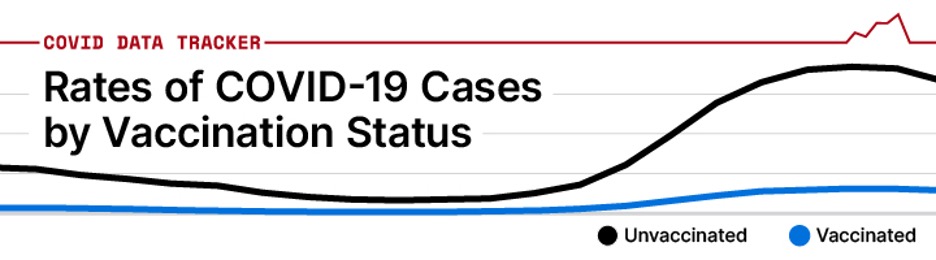
Because vaccines are not 100% effective, as the number of people who are fully vaccinated goes up, the number of vaccine breakthrough infections will also increase. However, the risk of infection remains much higher for unvaccinated than vaccinated people.

The latest data on rates of COVID-19 cases, hospitalizations, and deaths by vaccination status are available from the CDC COVID Data Tracker.

Vaccine Breakthrough and Variants

CDC continues to actively monitor vaccine safety and effectiveness against new and emerging variants for all FDA-authorized COVID-19 vaccines. Research shows that the FDA-authorized vaccines offer protection against severe disease, hospitalization, and death against currently circulating variants in the United States. However, some people who are fully vaccinated will get COVID-19.

The Delta variant is more contagious than previous variants of the virus that causes COVID-19. However, studies so far indicate that the vaccines used in the United States work well against the Delta variant, particularly in preventing severe disease and hospitalization.

Overall, if there are more COVID-19 infections, there will be more vaccine breakthrough infections. However, the risk of infection, hospitalization, and death is much lower in vaccinated compared to unvaccinated people. Therefore, everyone ages 5 years and older should get vaccinated to protect themselves and those around them, including family members who are not able to be vaccinated from severe disease and death.

How CDC Monitors Breakthrough Infections

CDC has multiple surveillance systems and ongoing research studies to monitor the performance of vaccines in preventing infection, disease, hospitalization, and death. CDC also collects data on vaccine breakthrough infections through outbreak investigations.

About COVID-NET

One important system that CDC uses to track vaccine breakthrough infections is COVID-NET (The Coronavirus Disease 2019 [COVID-19]-Associated Hospitalization Surveillance Network). This system provides the most complete data on vaccine breakthroughs in the general population. COVID-NET is a population-based surveillance system that collects reports of lab-confirmed COVID-19 related hospitalizations in 99 countries, in 14 states.

COVID-NET covers approximately 10% of the US population. One recent COVID-NET publication assessed the effectiveness of COVID-19 vaccines in preventing hospitalization among adults 65 years and older. This system provides complete data on vaccine breakthrough hospitalizations in the general population.

Examples of CDC’s Systems for Monitoring:

Outcome MonitoredPopulation MonitoredMonitoring System
InfectionLong-term care facility residentsNHSN
Infection and symptomatic illnessHealthcare providers and frontline workersHEROES/RECOVER
Hospitalizations and deathsHospitalized adultsIVY
Hospitalizations and deathsHospitalized people (all ages)COVID-NET
Urgent care, emergency care,
hospitalization, and deaths
Urgent Care, emergency departments,
and hospitalized people (all ages)
VISION

Voluntary Reporting by State Health Departments

When the United States began widespread COVID-19 vaccinations, CDC put in place a system where state health departments could report COVID-19 vaccine breakthrough infections to CDC.

On May 1, 2021, after collecting data on thousands of vaccine breakthrough infections, CDC changed the focus of how it uses data from this reporting system.

  • One of the strengths of this system is collecting data on severe cases of COVID-19 vaccine breakthrough infections since it is likely that most of these types of vaccine breakthrough cases seek medical care and are diagnosed and reported as a COVID-19 case.
  • Persons with asymptomatic or mild cases of vaccine breakthrough infections may not seek testing or medical care and thus these types of vaccine breakthrough cases may be underrepresented in this system. For this reason, CDC relies on a variety of additional surveillance approaches to ensure that it is collecting information on all types of vaccine breakthrough cases.
  • CDC continues to monitor data on all cases reported by the state health department as vaccine breakthrough cases. Currently, 49 states have reported at least one vaccine breakthrough infection to this system.

Families with Vaccinated and Unvaccinated Members

November 8, 2021

What You Need To Know

  • If you’ve been fully vaccinated against COVID-19, you’ve taken the first step toward protecting yourself and your family and returning to many of the activities you did before the pandemic.
  • To maximize protection from the Delta variant of the virus that causes COVID-19 and prevent possibly spreading it to others, wear a mask indoors in public if you are in an area of substantial or high transmission.
  • Wearing a mask is most important if you have a weakened immune system or if, because of your age or an underlying medical condition, you are at increased risk for severe disease, or if someone in your household has a weakened immune system, is at increased risk for severe disease, or is unvaccinated. If this applies to you or your household, you might choose to wear a mask regardless of the level of transmission in your area.

How Can I Protect My Unvaccinated Family Members?

These are the best ways to protect your unvaccinated family members, including children who cannot get vaccinated yet:

  • Get vaccinated yourself. COVID-19 vaccines reduce the risk of people getting COVID-19 and can also reduce the risk of spreading it.
  • Be sure to get everyone in your family who is 5 years or older vaccinated against COVID-19.
  • Wear a mask
    • To maximize protection from the Delta variant and prevent possibly spreading it to others, have everyone in your family, even those who are vaccinated, wear a mask indoors in public if you are in an area of substantial or high transmission.
    • You might choose to have everyone in your family, even those who are vaccinated, wear a mask indoors in public regardless of the level of transmission in your area.
    • Unvaccinated family members, including children ages 2 years and older, should wear a mask in all indoor public settings.
      • To set an example, you also might choose to wear a mask.
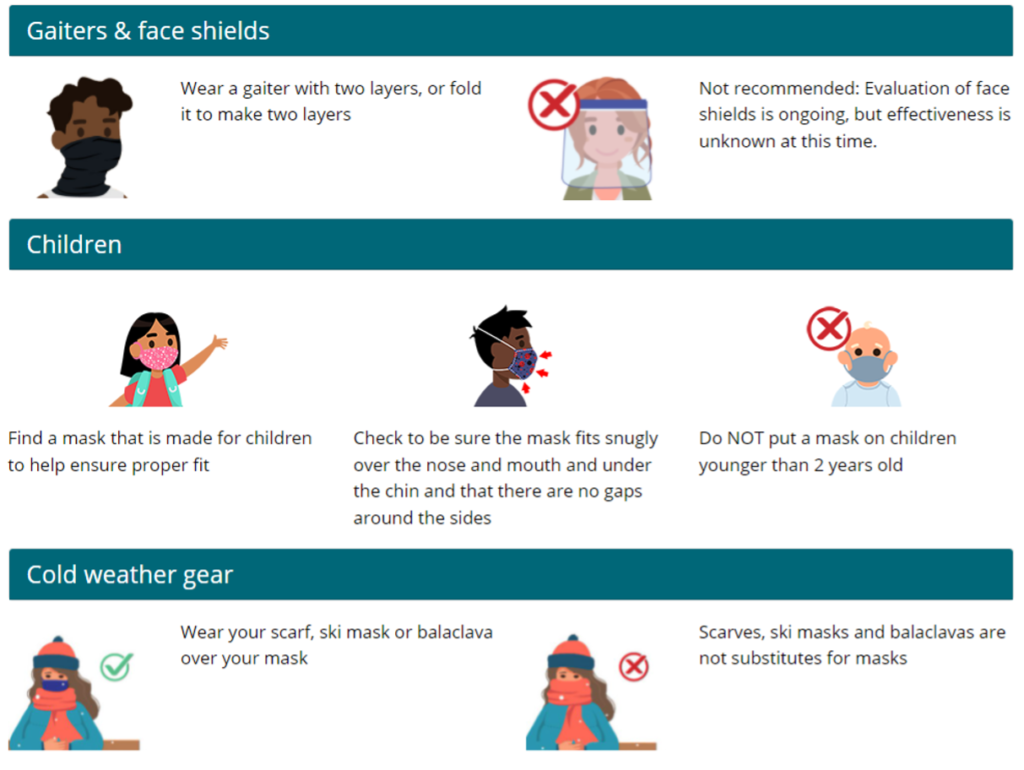
      • Do NOT put a mask on children younger than 2 years old.

How Do I Protect A Family Member Who Has A Condition Or Is Taking Medications That Weaken Their Immune System?

  • Get vaccinated yourself. COVID-19 vaccines reduce the risk of people getting COVID-19 and can also reduce the risk of spreading it.
  • People who have a condition or are taking medications that weaken their immune system may NOT be protected, even if they are fully vaccinated. They should continue to take all precautions recommended for unvaccinated people, including wearing a well-fitted mask.
  • If you live with someone who has a weakened immune system or is at increased risk for severe disease, you might choose to wear a mask in all indoor public settings regardless of the level of transmission in your area.

Choose Safer Activities For Your Family

  • Outdoor activities are safer than indoor ones. If you are indoors, choose a location that is well ventilated, for example, a room with open windows, and know when to wear a mask.
  • Avoid activities that make it hard to stay 6 feet away from others.
  • If your family member is younger than 2 years old or cannot wear a mask, limit visits with people who are not vaccinated or whose vaccination status is unknown and keep distance between your child and other people in public.

Regardless of which safer activities your family chooses, remember to protect yourself and others. To learn more, visit

https://www.cdc.gov/coronavirus/2019-ncov/your-health/about-covid-19/caring-for-children/families.html

How to Select, Wear, and Clean Your Mask

November 1, 2021

Your Guide to Masks

  • Everyone 2 years of age or older who is not fully vaccinated should wear a mask in indoor public places.
  • In general, you do not need to wear a mask in outdoor settings.
    • In areas with high numbers of COVID-19 cases, consider wearing a mask in crowded outdoor settings and for activities with close contact with others who are not fully vaccined.
  • People who have a condition or are taking medications that weaken their immune system may not be fully protected even if they are fully vaccinated. They should continue to take all precautions recommended for unvaccinated people, including wearing a well-fitted mask, until advised otherwise by their healthcare provider.
  • If you are fully vaccinated, to maximize protection from the Delta variant and prevent possible spreading to others, wear a mask indoors in public if you are in an area of substantial or high transmission.
  • If you are fully vaccined, see ‘When You’ve Been Fully Vaccinated‘.

Wearing a mask over your nose and mouth is required on planes, buses, trains, and other forms of public transportation traveling into, within, or out of the United States and while indoors at US transportation hubs such as airports and train stations. Travelers are not required to wear a mask in outdoor areas of a conveyance (like on open deck areas of a ferry or the uncovered top deck of a bus.)

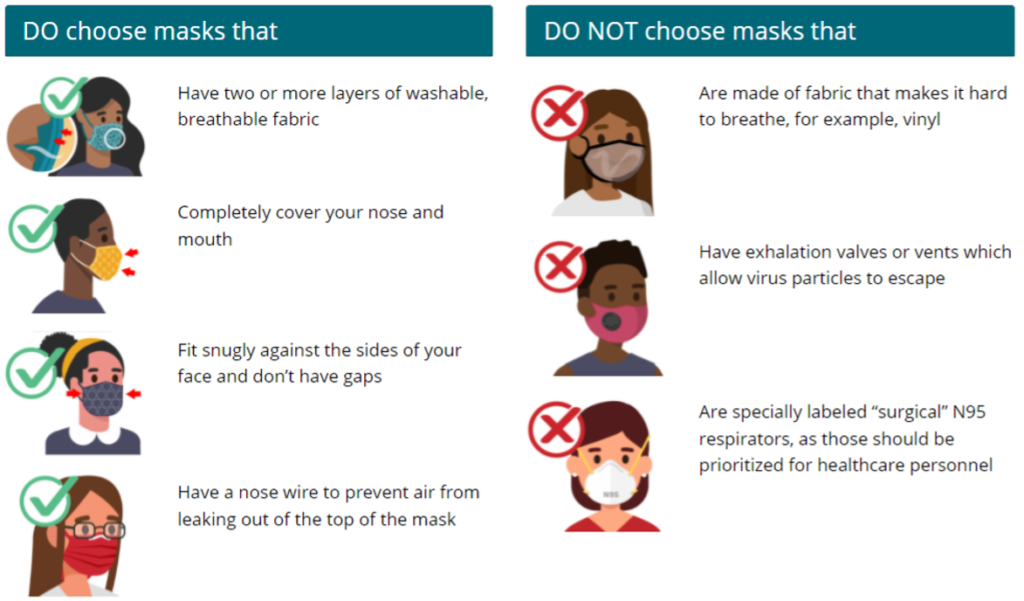
How to Select

Special Considerations

Mask Use & Carbon Dioxide

  • Wearing a mask does not raise the carbon dioxide (CO2) level in the air you breathe.
  • Cloth masks and surgical masks do not provide an airtight fit across the face. CO2 escapes into the air through the mask when you breathe out or talk. CO2 molecules are small enough to easily pass through mask material. In contrast, the respiratory droplets that carry the virus that causes COVID-19 are much larger than CO2, so they cannot pass as easily through a properly designed and properly worn mask.
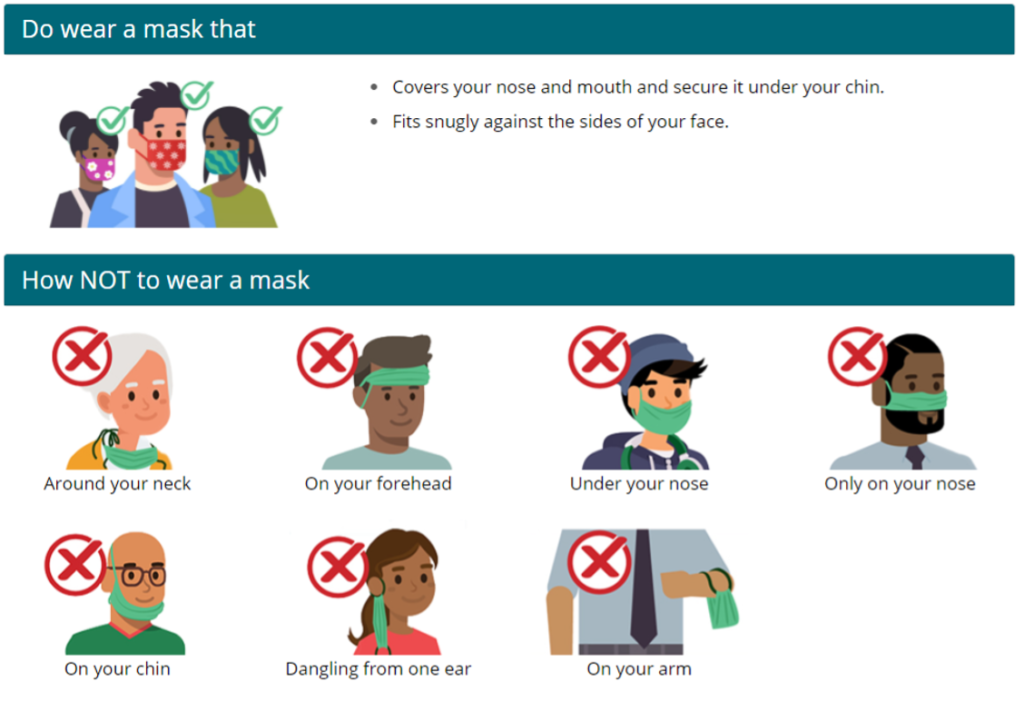
  • How to Wear

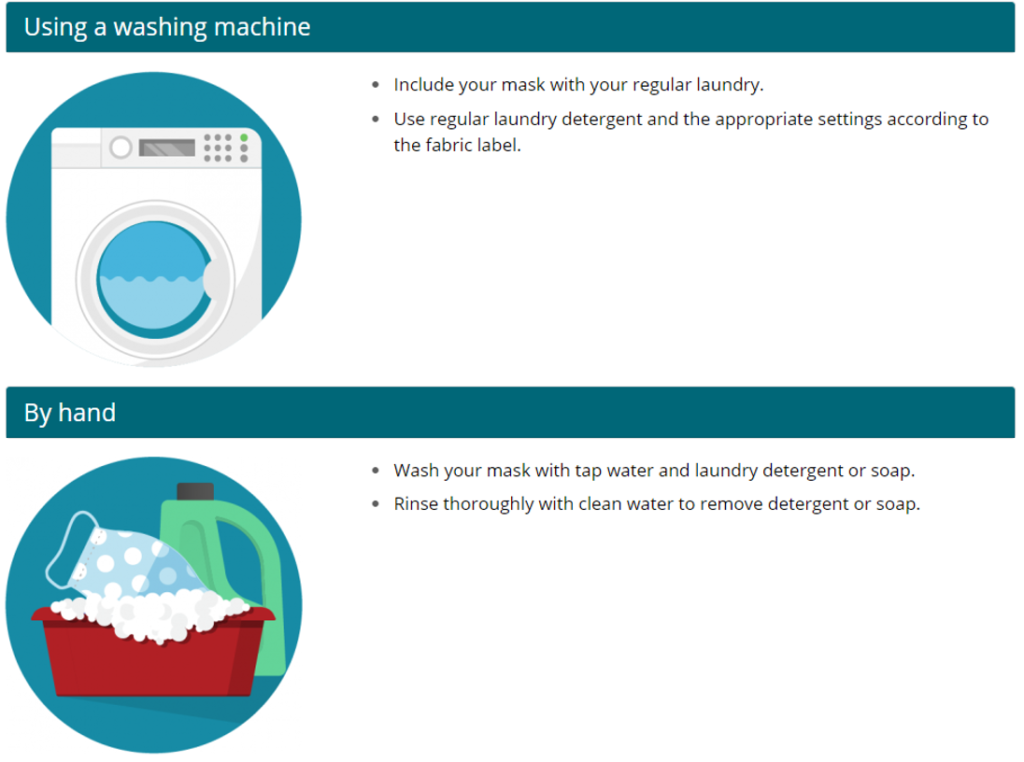
    How to Clean

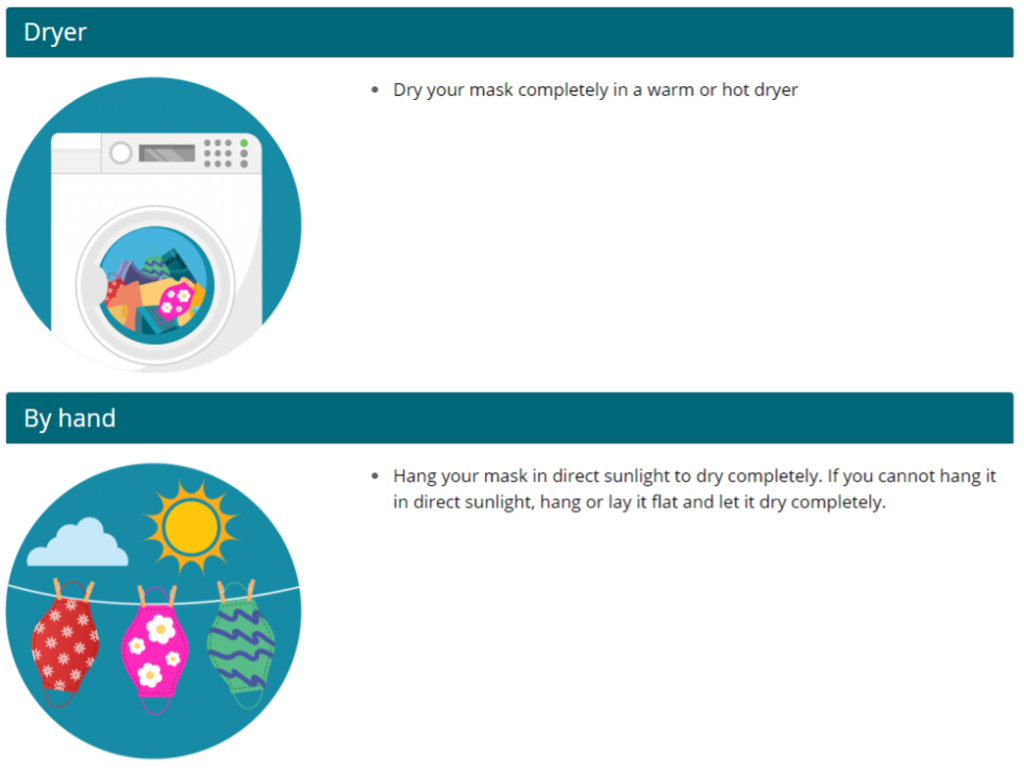
    Dry Your Mask

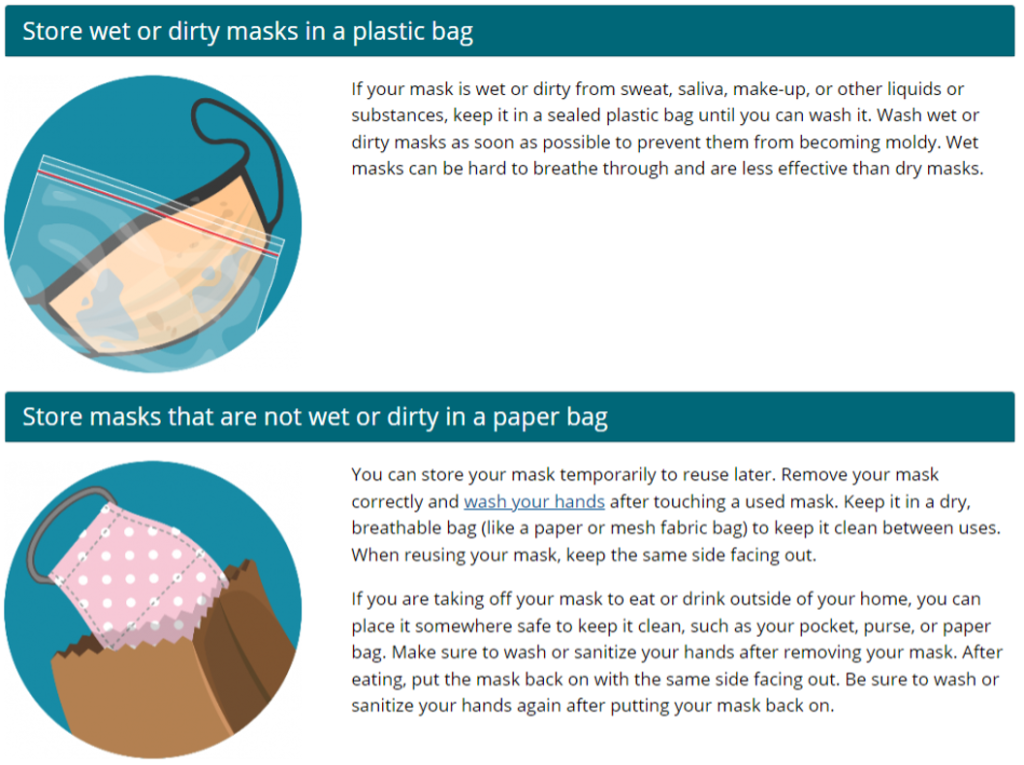
    How to Store

    CDC Expands Eligibility for COVID-19 Booster Shots

    October 25, 2021

    On October 21, 2021, CDC Director Rochelle P. Walensky, M.D., M.P.H., endorsed the CDC Advisory Committee on Immunization Practices’ (ACIP) recommendation for a booster shot of COVID-19 vaccine in certain populations. The FDA’s authorization and CDC’s recommendation for use are important steps forward as we work to stay ahead of the virus and keep Americans safe.

    For individuals who received a Pfizer-BioNTech or Moderna COVID-19 vaccine, the following groups are eligible for a booster shot at 6 months or more after their initial series:

    • 65 years and older
    • Age 18+ who live in long-term care settings
    • Age 18+ who have underlying medical conditions
    • Age 18+ who work or live in high-risk settings

    For the nearly 15 million people who got the Johnson & Johnson COVID-19 vaccine, booster shots are also recommended for those who are 18 and older and who were vaccinated two or more months ago.

    There are now booster recommendations for all three available COVID-19 vaccines in the United States. Eligible individuals may choose which vaccine they receive as a booster dose. Some people may have a preference for the vaccine type that they originally received, and others may prefer to get a different booster. CDC’s recommendations now allow for this type of mix and match dosing for booster shots.

    Millions of people are newly eligible to receive a booster shot and will benefit from additional protection. However, today’s action should not distract from the critical work of ensuring that unvaccinated people take the first step and get an initial COVID-19 vaccine. More than 65 million Americans remain unvaccinated, leaving themselves- and their children, families, loved ones, and communities- vulnerable.

    Available data right now show that all three of the COVID-19 vaccines approved or authorized in the US continue to be highly effective in reducing risk of severe disease, hospitalization, and death, even against the widely circulating Delta variant. Vaccination remains the best way to protect yourself and reduce the spread of the virus and help prevent new variants from emerging.

    The following is attributable to Dr. Walensky:

    “These recommendations are another example of our fundamental commitment to protect as many people as possible from COVID-19. The evidence shows that all three COVID-19 vaccines authorized in the United States are safe- as demonstrated by the over 400 million vaccine doses already given. And they are all highly effective in reducing the risk of severe disease, hospitalization, and death, even in the midst of the widely circulating Delta variant.”

    To learn more, visit https://www.cdc.gov/media/releases/2021/p1021-covid-booster.html

    Who is Eligible for a COVID-19 Vaccine Booster Shot?

    October 18, 2021

    What You Need To Know

    COVID-19 Vaccine booster shots are available for the following Pfizer-BioNTech vaccine recipients who completed their initial series at least 6 months ago are:

    • 65 years and older
    • Age 18+ who live in long-term care settings
    • Age 18+ who have underlying medical conditions
    • Age 18+ who work in high-risk settings
    • Age 18+ who live in high-risk settings

    Data Supporting Need For A Booster Shot

    Studies show that after getting vaccinated against COVID-19, protection against the virus may decrease over time and be less able to protect against the Delta variant. Although COVID-19 vaccination for adults aged 65 years and older remains effective in preventing severe disease, recent data suggests vaccination is less effective at preventing infection or milder illness with symptoms. Emerging evidence also shows that among healthcare and other frontline workers, vaccine effectiveness against COVID-19 infection is decreasing over time. This lower effectiveness is likely due to the combination of decreasing protection as time passes since getting vaccinated (e.g., waning immunity) as well as the greater infectiousness of the Delta variant.

    Data from a small clinical trial shows that a Pfizer-BioNTech booster shot increased the immune response in trial participants who finished their primary series 6 months earlier. With an increased immune response, people should have improved protection against COVID-19, including the Delta variant.

    Booster Shots Are Only Available For Some Pfizer-BioNTech Vaccine Recipients

    Only certain populations initially vaccinated with the Pfizer-BioNTech vaccine can get a booster shot at this time.

    Older Adults & 50-64 Year Old People With Medical Conditions

    People aged 65 years and older and adults 50-64 with underlying medical conditions should get a booster shot of Pfizer-BioNTech vaccine. The risk of severe illness from COVID-19 increases with age, and can also increase for adults of any age with underlying medical conditions.

    Long-Term Care Setting Residents Aged 18 Years & Older

    Residents aged 18 years and older of long-term care settings should get a booster shot of Pfizer-BioNTech vaccine. Because residents in long-term care settings live closely together in group settings and are often older adults with underlying medical conditions, they are at increased risk of infection and severe illness from COVID-19.

    People With Medical Conditions Aged 18-49 Years

    People aged 18-49 years with underlying medical conditions may get a booster shot of Pfizer-BioNTech vaccine based on their individual benefits and risks. Adults aged 18-49 years who have underlying medical conditions are at increased risk for severe illness from COVID-19. However, that risk is likely not as high as it would be for adults aged 50 years and older who have underlying medical conditions. People aged 18-49 years who have underlying medical conditions may get a booster shot after considering their individual risks and benefits. This recommendation may change in the future as more data becomes available.

    Employees And Residents At Increased Risk For COVID-19 Exposure & Transition

    People aged 18-64 years at increased risk for COVID-19 exposure and transmission because of occupational or institutional setting may get a booster shot of Pfizer-BioNTech vaccine based on their individual benefits and risks. Adults aged 18-64 years who work or reside in certain settings (e.g., healthcare, schools, correctional facilities, homeless shelters) may be at increased risk of being exposed to COVID-19, which could be spreading where they work or reside. Since that risk can vary across settings and based on how much COVID-19 is spreading in a community, people aged 18-64 years who are at increased risk for COVID-19 exposure and transmission because of occupational or institutional setting may get a booster shot after considering their individual risks and benefits. This recommendation may change in the future as more data becomes available.

    • Example of workers who may get the Pfizer-BioNTech booster shots
      • First responders (e.g., healthcare workers, firefighters, police, congregate care staff)
      • Education staff (e.g., teachers, support staff, daycare workers)
      • Food and agriculture workers
      • Manufacturing workers
      • Corrections workers
      • US Postal Service workers
      • Public transit workers
      • Grocery store workers

    Find A COVID-19 Vaccine

    Find a COVID-19 Vaccine: Search vaccines.gov, text your ZIP code to 438829, or call 1-800-232-0233 to find locations near you.

    • Check your local pharmacy’s website to see if vaccination walk-ins or appointments are available
    • Contact your state or local health department for more information

    Frequently Asked Questions

    • When can I get a COVID-19 vaccine booster if I am NOT in one of the recommended groups?
      • Additional populations may be recommended to receive a booster shot as more data becomes available. The COVID-19 vaccines approved and authorized in the United States continue to be effective at reducing risk of severe disease, hospitalization, and death. Experts are looking at all available data to understand how well the vaccines are working for different populations. This includes looking at how new variants, like Delta, affect vaccine effectiveness.
    • What should people do who received Moderna or Johnson & Johnson’s Janssen vaccine do?
      • The Advisory Committee on Immunization Practices (ACIP) & CDC’s recommendations are bound by what the US Food and Drug Administration’s (FDA) authorization allows. At this time, the Pfizer-BioNTech booster authorization only applies to people whose primary series was Pfizer-BioNTech vaccine. People in the recommended groups who got the Moderna or J&J/Janssen vaccine may need a booster shot. More data on the effectiveness and safety of Moderna and J&J/Janssen booster shots are expected soon. With those data in hand, CDC will keep the public informed with a timely plan for Moderna and J&J/Janssen booster shots.
    • If we need a booster shot, does that mean that the vaccines aren’t working?
      • No. COVID-19 vaccines are working well to prevent severe illness, hospitalization, and death, event against the widely circulating Delta variant. However, public health experts are starting to see reduced protection, especially among certain populations, against mild and moderate disease.
    • What are the risks to getting a booster shot?
      • So far, reactions reported after getting the Pfizer-BioNTech booster shot were similar to that of the 2-shot primary series. Fatigue and pain at the injection site were the most commonly reported side effects, and overall, most side effects were mild to moderate. However, as with the 2-shot primary series, serious side effects are rare, but may occur.
    • Am I still considered “fully vaccinated” if I don’t get a booster shot?
      • Yes. Everyone is still considered fully vaccinated two weeks after their second dose in a 2-shot series, such as the Pfizer-BioNTech or Moderna vaccines, or two weeks after a single-dose vaccine, such as the J&J/Janssen vaccine.
    • What is the difference between a booster shot and an additional dose?
      • A booster shot is administered when a person has completed their vaccine series and protection against the virus has decreased over time. Additional doses are administered to people with moderately to severely compromised immune systems. This additional dose of an mRNA-COVID-19 vaccine is intended to improve immunocompromised people’s response to their initial vaccine series.
    • Your CDC COVID-19 Vaccination Record Card & Booster Shots
      • At your first vaccination appointment, you should have received a CDC COVID-19 Vaccination Record card that tells you what COVID-19 vaccine you received, the date you received, and where you received it. Bring this vaccination card to your booster shot vaccination appointment. If you did not receive a CDC COVID-19 Vaccination Record card at your first appointment, contact the vaccination sit where you got your first shot or your state health departments to find out how you can get a card.

    To learn more, visit https://www.cdc.gov/coronavirus/2019-ncov/vaccines/booster-shot.html#long-term-care

    How Long-Term Care Facilities Can Help Monitor COVID-19 Vaccine Safety

    October 8, 2021

    What Long-Term Care Facility Administrators Should Know

    Staff and residents of nursing homes and assisted living facilities are among the first groups to receive COVID-19 vaccines in the United States. As an administrator, your and your staff’s participation in vaccine safety monitoring is essential to ensuring the safety of COVID-19 vaccines. No safety concerns have been detected to date, but ongoing monitoring will continue. The CDC has expanded safety surveillance through new systems and additional information sources, as well as by scaling up existing safety monitoring systems.

    What is V-Safe?

    V-safe is a new smartphone-based tool that helps CDC monitor the safety of COVID-19 vaccines through the use of text messaging and web surveys. These health check-ins inform CDC how the participant is feeling after receiving a COVID-19 vaccine. Depending on the answers, someone from CDC may call to check on the participant and get more information. V-safe will also remind the participant to get a second dose of the vaccine if they need one. V-safe enrollment and check-ins are quick and easy and can be done on a smartphone. V-safe cannot schedule vaccination appointments. If a participant needs to schedule, reschedule, or cancel a COVID-19 vaccination appointment, they should contact either the location that set up their appointment or local vaccination provider.

    • All long-term care staff members who are vaccinated against COVID-19 are encouraged to enroll in V-safe.
    • Long-term care residents can also enroll in V-safe. Healthcare providers and caregivers may assist residents with enrolling. However, providers or caregivers should not complete check-ins for residents.
    • At this time, only people with smartphones will be able to participate in V-safe monitoring. Long-term care residents may be less likely to have access to a smartphone and, therefore, may not be able to report side effects or adverse events through V-safe. Long-term care staff should monitor recently vaccinated residents for any potential adverse events and report those events to VAERS.

    What is VAERS?

    VAERS is a national vaccine safety monitoring system that helps CDC and the FDA monitor health problems after vaccination. VAERS is not designed to determine if a vaccine a health problem but is especially useful for detecting unusual or unexpected patterns of adverse event reporting that might indicate a possible safety problem with a vaccine. Residents, caregivers, healthcare providers, and nursing home staff can report medical events or health problems following vaccinations to VAERS, even if they aren’t sure the vaccine was the cause.

    • Anyone can report health problems that happen after vaccination to VAERS.
    • In general, report any medical event or health problem after COVID-19 vaccination that is concerning to you, your staff, or your residents.
    • It is especially important to report any problem that results in hospitalization, significant disability, or death.
    • VAERS does NOT provide treatment or medical advice. If a vaccine recipient needs medical advice, please contact a healthcare provider.

    Healthcare providers are encouraged to report to VAERS any adverse event they think is medically important or clinically significant, even if they think the event might not be related to the vaccine. However, healthcare providers are required to report to VAERS the following adverse events, in accordance with the emergency use authorization (EUA) for COVID-19 vaccines:

    • Vaccine administration errors, whether or not associated with an adverse event
    • Serious adverse events (as defined by federal law), regardless of causality, including:
      • Death
      • A life-threatening event
      • Inpatient hospitalization or prolongation of existing hospitalization
      • Persistent or significant incapacity or substantial disruption of the ability to conduct normal life functions
      • Congenital anomaly/birth defect
      • An important medical event that based on appropriate medical judgement may jeopardize the individual and may require medical or surgical intervention to prevent one of the outcomes listed above
      • Cases of Multisystem Inflammatory Syndrome (MIS-C or MIS-A)
      • Cases of COVID-19 that result in hospitalization or death

    To learn more, visit https://www.cdc.gov/vaccines/covid-19/downloads/ltcf-help-monitor-covid-19-vaccine-safety-508.pdf

    COVID-19 County Check Tool: Understanding Community Transmission Levels in Your County

    October 4, 2021

    COVID-19 spreads easily between people. CDC tracks how much COVID-19 is spreading as well as likely people are to be exposed to it with a measurement known as the “level of community transmission”. You can use the COVID-19 County Check Tool for a snapshot of your county’s level of community transmission over the past 7 days. The tool also displays guidance on masking based on how the virus is spreading in your county.

    How CDC Measures the County Level of Community Transmission

    CDC looks at two numbers – total new cases and percent positivity – to determine the level of community transmission.

    • Total New Cases refers to a county’s rate of new COVID-19 infections, reported over the past 7 days, per every 100,000 residents. To calculate this number, CDC divides the total number of new infections by the total population in that county. CDC multiplies this number by 100,000.
    • Percent Positivity refers to the percentage of positive COVID-19 tests in a county over the past 7 days. This number is based on reports from states on a specific type of test known as a Nucleic Acid Amplification Test (NAAT). To calculate this number, CDC divides the number of positive tests by the total number of NAATs performed in that county. CDC multiplies this number by 100 to calculate the percentage of all tests that were positive. Learn more at Calculating SARS-CoV-2 Laboratory Test Percent Positivity.

    A higher number of total new cases and a higher percent positivity correspond with a higher level of community transmission, as shown below. If the values for each of these two metric differ (for example, if one indicated moderate and the other low), then the higher of the two should be used to make decisions about mask use in a county.

    County Level of Community Transmission and Masking

    People and local decision-makers should consider the county level of community transmission when making decisions about masking. Although COVID-19 vaccines authorized in the United States are highly effective at limiting the spread of COVID-19 and preventing severe illness, vaccination in some parts of the country remains low. Layered prevention strategies – like masking along with getting vaccinated – can help further reduce the spread of COVID-19. CDC’s updated guidance, issued in July 2021, advises using county community transmission levels over the last 7 days to help determine who should mask and under what circumstances. See below for a quick reference on when to mask:

    County Level of Community TransmissionGuidance
    High or Substantial TransmissionEveryone should wear a mask in public, indoor settings
    Moderate or Low TransmissionUnvaccinated people should wear a mask in public, indoor settings

    Mask requirements vary from place to place. Make sure you follow local laws, rules, regulation, or guidance. To learn more, visit https://www.cdc.gov/coronavirus/2019-ncov/more/aboutcovidcountycheck/index.html

    Comparative Effectiveness of Moderna, Pfizer, and Janssen Vaccines in Preventing COVID-19 Hospitalizations

    September 27, 2021

    What We Know

    Two 2-dose mRNA COVID-19 vaccines (from Pfizer-BioNTech and Moderna) and a 1-dose viral vector vaccine (from Janssen [Johnson & Johnson]) are currently used in the United states.

    What is New

    Among US adults without immunocompromising conditions, vaccine effectiveness against COVID-19 hospitalization during March 11-August 15, 2021, was higher for the Moderna vaccine (93%) than the Pfizer-BioNTech vaccine (88%) and the Janssen vaccine (71%).

    Implications for Public Health Practice

    Although these real-world data suggest some variation in levels of protection by vaccine, all FDA-approved or authorized COVID-19 vaccines provide substantial protection against COVID-19 hospitalization.

    Two-dose regiments of the Moderna and Pfizer-BioNTech mRNA vaccines provided a high level of protection against COVID-19 hospitalizations in a real-world evaluation at 21 hospitals during March-August 2021. VE against COVID-19 hospitalization for Moderna and Pfizer-BioNTech vaccines was 93% and 88%, respectively, whereas the single-dose Janssen vaccine had someone lower VE at 71%. Persons vaccinated with Janssen also had lower postvaccination anti-SARS-CoV-2 antibody levels than did recipients of mRNA vaccines. Although an immunologic correlate or protection has not been established for COVID-19 vaccines, antibody titers after infection and vaccination have been associated with protection (8). These real-world data suggests that the 2-dose Moderna and Pfizer-BioNTech mRNA vaccine regimens provide more protection than does the 1-dose Janssen viral vector vaccine regimen. Although the Janssen vaccine had lower observed VE, 1 dose of Janssen vaccine still reduced risk for COVID-19-associated hospitalization by 71%.

    The findings in this report are subject to at least six limitations. First, this analysis did not consider children, immunocompromised adults, or VE against COVID-19 that did not result in hospitalization. Second, the Cis for the Janssen VE estimates were wide because of the relatively small number of patients who received this vaccine. Third, follow-up time was limited to approximately 29 weeks since receipt of full vaccination, and further surveillance of VE over time is warranted. Fourth, although VE estimates were adjusted for relevant potential confounders, residual confounding is possible. Fifth, product-specific VE by variant, including against Delta variants (B.1.617.2 and AY sublineages), was not evaluated. Finally, antibody levels were measured at only a single time point 2-6 weeks after vaccination and changes in antibody response over time as well as cell-mediated immune responses were not assessed.

    To learn more, visit https://www.cdc.gov/mmwr/volumes/70/wr/mm7038e1.htm?s_cid=mm7038e1_x

    I’ve Already Had COVID-19. Do I Need the Vaccine?

    September 17, 2021

    You should get a COVID-19 vaccine, even if you have already had COVID-19. Research has not yet shown how long you are protected from getting COVID-19 again after you recover from COVID-19. COVID-19 vaccinations also help protect you even if you’ve already had the virus.


    Evidence is emerging that people get better protection by being fully vaccinated compared with having COVID-19. One study showed that unvaccinated people who already had COVID-19 are more than two times as likely than fully vaccinated people to get COVID-19 again. Learn more about why getting vaccinated is a safer way to build protection than getting infected. If you were treated for COVID-19 with monoclonal antibodies or convalescent plasma, you should wait 90 days before getting a COVID-19 vaccine. Talk to your healthcare professional if you are unsure what treatments you received or if you have more questions about getting a COVID-19 vaccine.


    Experts are still learning more about how long vaccines protect against COVID-19 in real-world conditions. CDC will keep the public informed as new evidence becomes available. To learn more, visit https://www.cdc.gov/coronavirus/2019-ncov/vaccines/prepare-for-vaccination.html