Follow Highlands Nursing and Rehabilitation on Facebook! Click Here

To see a list of frequently asked questions please Click Here

Highlands | Nursing & Rehabilitation

Latest News

Latest News

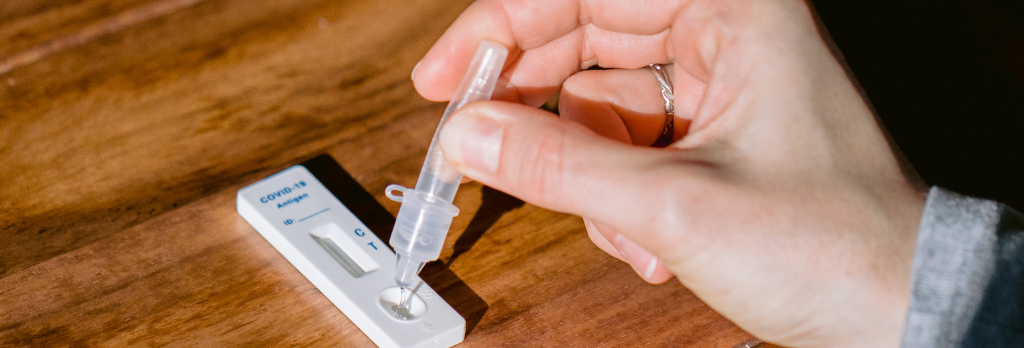
Self-Testing

February 4, 2022

What You Need to Know

  • Testing is critically important to help reduce the spread of COVID-19.
  • COVID-19 self-tests can be taken at home or anywhere, are easy to use, and produce rapid results.
  • Self-tests (also referred to as at-home tests or over-the-counter (OTC) tests) are one of many risk-reduction measures, along with vaccinationmasking, and physical distancing, that protect you and others by reducing the chances of spreading  COVID-19.
  • Free self-tests can be ordered at COVIDtests.gov.
  • You can use COVID-19 self-tests regardless of vaccination status or whether or not you have symptoms.
  • Consider using a COVID-19 self-test before joining indoor gatherings with others who are not in your household. This is especially important before gathering with individuals at risk of severe diseaseolder individuals, those who are immunocompromised, or unvaccinated people, including children who cannot get vaccinated yet.
  • To obtain accurate results, follow all of the manufacturer’s instructions for performing the self-test.
  • If you test positive, you should isolate and wear a well-fitting mask if you must be around others, inform your healthcare provider, and inform any close contacts. If you are a healthcare provider, follow CDC guidance for healthcare providers.
  • A negative self-test result means that the test did not detect the virus that causes but it does not rule out a COVID-19 infection. A single negative self-test result may not reliable, especially if you have symptoms associated with COVID-19.
  • If your result is negative, repeating the self-test within a few days, with at least 24 hours between tests, will increase the confidence that you are not infected with the virus causing COVID-19.

What is a Self-Test?

Self-tests for COVID-19 are those that can be performed on yourself at home or anywhere. Sometimes a self-test is also called a “home test,” an “at-home test,” or an “over-the-counter (OTC) test.” Self-testing offers fast results. Self-tests are one of several options for testing for the virus that causes COVID-19 and may be more convenient than laboratory-based tests and point-of-care tests.

Visit FDA’s website for a list of authorized tests. Some self-tests may have age limitations for self-collection or collection by an adult for a child.

As of January 2022, self-tests are used to detect current infection. No self-tests are available to detect antibodies to the virus, which would suggest previous infection.

When to Consider Self-Testing

Self-tests may be used if you have COVID-19 symptoms or have been in close contact or potentially in close contact with an individual with COVID-19.

Even if you don’t have symptoms and have not been in close contact with an individual with COVID-19, using a self-test before gathering indoors with others can give you information about the risk of spreading COVID-19. This is especially important before gathering with individuals at risk of severe diseaseolder individuals,  those who are immunocompromised, or unvaccinated people, including children who cannot get vaccinated yet.

Specifically, the best timing when using a self-test is:

  • If you have COVID-19 symptoms, use a self-test immediately
  • If you were a close contact of someone with COVID-19, self-test after at least 5 days, plus a second test in 1 or 2 days if your first test is negative (See Serial Testing, below)
  • If you are testing before a gathering, test immediately before the gathering (or as close in time to the event as possible)

How to Get a Self-Test

Self-tests can be purchased online or in pharmacies and retail stores. Private health insurance will reimburse the cost of purchasing self-tests.

Self-tests can be purchased online or in pharmacies and retail stores. They are also available at no cost through some local health departments, Federally Qualified Health Centers (FQHC), or by ordering at COVIDtests.gov

For a list of authorized self-tests, see FDA EUA Testsexternal icon. Some tests may have age limitations for self-collection or collection by an adult for a child. If you are unable to obtain a self-test, but have symptoms of COVID-19 or have been exposed, stay away from others as much as possible and follow CDC recommendations for What to Do If You Are Sick. You may also consider visiting a community testing site. Call your local health department for additional testing options.

How to Use a Self-Test

Read the complete manufacturer’s instructions for use before using the test. Talk to a healthcare provider if you have questions about the test or your results.

Prepare to Collect a Specimen

  • Wash your hands with soap and water for at least 20 seconds.
  • Open the box and follow the instructions included with the COVID-19 self-test to collect your own nasal specimen.
  • If you do not collect the specimens as directed, your test results may be incorrect.

Collect a Specimen and Perform the Self-Test

Follow the manufacturer’s instructions exactly and perform the steps in the order that they are listed. The manufacturer may also provide other resources, such as quick reference guides or instructional videos, to help you perform the test correctly.

Most COVID-19 self-tests require the collection of a nasal specimen (see the Additional Print Resources section below).

Once collected, use the specimen as described in the instructions to complete the self-test.

If Your Test Result is Positive

You should isolate according to CDC recommendations  and wear a well-fitting mask if you must be around other people. Report your positive result to your healthcare provider. It is particularly important to seek medical care and possible treatment if you have an underlying medical condition that increases your risks from COVID-19. If your illness becomes severe, seek medical attention. If you have an emergency warning sign (including trouble breathing), seek emergency medical care immediately. To avoid spreading the virus to others, follow CDC recommendations.

Tell your close contacts that they may have been exposed to the virus that causes COVID-19. A person with COVID-19 can begin spreading the virus starting 48 hours (or 2 days) before they have any symptoms or test positive. By informing your close contacts that they may have been exposed, you are helping to protect everyone.

If you think your positive test result may be incorrect, contact a healthcare provider to determine whether additional testing is necessary.

If Your Test Result is Negative

A negative test result means that the virus that causes COVID-19 was not detected in your specimen, and you may have a lower risk of transmitting the disease to others. If you took the test while you had symptoms and followed all instructions carefully, a negative result means your current illness may not be COVID-19, though it does not rule out COVID-19 infection.

It is also possible for a test to give a negative result in some people who have COVID-19. This is called a false negative. You could also test negative if the specimen was collected too early in your infection. In this case, you could test positive later during your illness. You should consider serial testing (see below).

Even if you receive a negative result, you should continue to practice preventative measures, such as being up to date on your COVID-19 vaccination, wearing a mask indoors, and physical distancing to reduce the risk of spreading COVID-19.

If Your Result Shows Invalid or Error

Sometimes invalid results or an error can occur on the self-test device. Invalid results or an error can occur for many reasons. Your specimen may not have been collected correctly, or the test may have malfunctioned.

Invalid test results are rare but can occur. If the self-test shows an invalid result or a test error, the test did not work properly. If this happens, a new test is needed to get an accurate result. Refer to the manufacturer’s instructions in the package insert and contact the manufacturer for assistance, consider taking another self-test, or contact a healthcare provider for additional help.

Serial Testing (Repeat Testing)

Serial testing is when a person tests multiple times for COVID-19, or on a routine basis, such as every few days. Some self-tests are designed to be used in a series. By testing more frequently, you may be able to detect COVID-19 more quickly and could reduce the spread of infection. Some self-tests include instructions for performing serial testing, including the number of days between tests, and may include more than one test in the package.

If your self-test is negative, you should follow the manufacturer’s instructions for serial testing, if applicable. Manufacturer’s instructions are included in the test box and are also available on the FDA website. The instructions may recommend you test again within 2 or 3 days. Contact a healthcare provider if you have any questions about your test results or serial testing. You may also use the COVID-19 Viral Testing Tool to help you determine the next steps after testing.

If you think your negative test result may be incorrect, contact a healthcare provider to determine whether additional testing is necessary.

To learn more, please visit https://www.cdc.gov/coronavirus/2019-ncov/testing/self-testing.html
Preparing for Your COVID-19 Vaccine

January 28, 2022

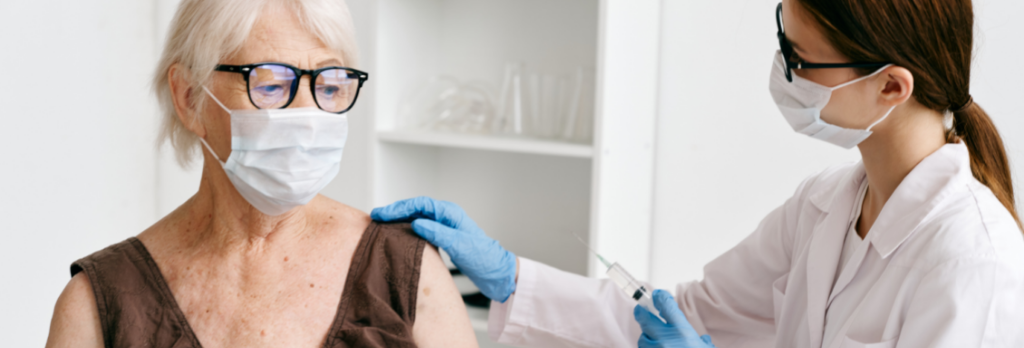
COVID-19 vaccines are effective at protecting you from getting sick even if you have had COVID-19. Vaccination is an important tool to help us get back to normal. This information will help you prepare for your COVID-19 vaccination.

Learn more about the different types of COVID-19 vaccines and how they work.

Learn more about the benefits of getting a COVID-19 vaccination.

Plan and Prepare for Your COVID-19 Vaccination

Who should Get a COVID-19 Vaccine?

  • COVID-19 vaccination is recommended for everyone ages 5 years and older
  • Moderately or severely immunocompromised people who are ages 5 years and older and received a Pfizer-BioNTech primary vaccine series or ages 18 years and older received a Moderna primary vaccine series should receive an additional primary dose of the same vaccine at least 28 days after their second one
  • Everyone ages 12 years and older who is fully vaccinated against COVID-19 should get a booster shot. Learn more about booster shots

Get Vaccinated Even If You Had COVID-19 and Think You Have Natural Immunity

You should get a COVID-19 vaccine even if you already had COVID-19.

Getting sick with COVID-19 offers some protection from future illness with COVID-19, sometimes called “natural immunity”. The level of protection people get from having COVID-19 may vary depending on how mild or severe their illness was, the time since their infection, and their age; and no currently available test can reliably determine if you are protected after a COVID-19 infection.

All COVID-19 vaccines currently available in the United States are effective at preventing COVID-19. Getting a COVID-19 vaccine gives most people a high level of protection against COVID-19, even in people who have already been sick with COVID-19.

Emerging evidence shows that getting a COVID-19 vaccine after you recover from COVID-19 infection provides added protection to your immune system. One study showed that, for people who already had COVID-19, those who do not get vaccinated after their recovery are more than 2 times as likely to get COVID-19 again than those who get fully vaccinated after their recovery.

People Who Should Wait to Get Vaccination

If you were treated for COVID-19 with monoclonal antibodies or convalescent plasma while sick with COVID-19, you should wait 90 days before getting a COVID-19 vaccine. If you received monoclonal antibodies or convalescent plasma after you were exposed to someone with COVID-19 to prevent you from getting sick, you should wait 30 days before getting a COVID-19 vaccine. Talk to your healthcare professional if you are unsure what treatments you received or if you have more questions about getting a COVID-19 vaccine.

If you or your child have a history of multisystem inflammatory syndrome in adults or children, consider delaying vaccination until you have recovered from being sick and for 90 days after the date of diagnosis of MIS-A or MIS-C. Learn more about the clinical considerations for people with a history of MIS-A or MIS-C.

Considerations for Taking Medication before Getting Vaccinated

For most people, it is not recommended to avoid, discontinue, or delay medications that you are routinely taking for prevention or treatment of other medical conditions around the time of COVID-19 vaccination.

If you are taking medications that suppress the immune system, you should talk to your healthcare provider about what is currently known and not known about the effectiveness of getting a COVID-19 vaccine. Ask about the best timing for receiving a vaccine. Learn about COVID-19 vaccines for moderately to severely immunocompromised people.

Most people who take medication can get a COVID-19 vaccine. Taking one of the following medications is not, on its own, a reason to avoid getting your COVID-19 vaccination:

  • Over-the-counter medications (non-prescription)
  • Non-steroidal anti-inflammatory drugs (NSAIDs) (naproxen, ibproufen, aspirin, etc.)
  • Acetaminophen (Tylenol, etc.)
  • Biologics or biologic response modifiers that treat autoimmune diseases
  • Chemotherapy or other cancer treatment medications
  • Antiviral medication
  • Antibiotics
  • Statins
  • Blood pressure medications/antihypertensives (amlodipine, lisinopril, etc.)
  • Diuretics
  • Thyroid medications
  • Antidepressants
  • Metformin
  • Diabetic medications
  • Insulin
  • Steroids (prednisone, etc.)

This is not a complete list. It is meant to provide some examples of common medications. Taking any of these medications will not make COVID-19 vaccination harmful or dangerous.

If you have questions about medications that you are taking, talk to your healthcare professional or vaccination providers.

For more information, please visit

visit https://www.cdc.gov/coronavirus/2019-ncov/vaccines/prepare-for-vaccination.html.

Staying Up to Date with Your Vaccinations

January 21, 2022

COVID-19 Vaccines

COVID-19 vaccines available in the United States are effective at protecting people from getting seriously ill, getting hospitalized, and even dying. As with vaccines for other diseases, people who are up to date are optimally protected. CDC recommends that everyone 5 years and older get their primary series of COVID-19 vaccines, and receive a booster dose when eligible.

When Are You Up to Date?

You are up to date with your COVID-19 vaccines when you have followed the current recommendations listed below. The recommendations will be different depending on your age, your health status, and when you first got vaccinated.

Many people who are immunocompromised may need an additional dose as part of their primary vaccine series.

Note that booster shots are not recommended for everyone at this time.

Pfizer-BioNTechModernaJohnson & Johnson’s Janssen
Primary Series
2 doses
Given 3 weeks (21 days) apart
Primary Series
2 doses
Given 4 weeks (28 days) apart
Primary Series
1 dose
Fully Vaccinated
2 weeks after final dose in primary series
Fully Vaccinated
2 weeks after final dose in primary series
Fully Vaccinated
2 weeks after 1st dose
Booster Dose
Everyone ages 12+ should get a booster dose at least 5 months after the last dose in their primary series
– Teens 12-17 should only get a Pfizer-BioNTech COVID-19 Vaccine booster
– Everyone 18+ should get a booster dose of either Pfizer-BioNTech or Moderna (mRNA COVID-19 vaccines)
Booster Dose
Everyone ages 18+ should get a booster dose of either Pfizer-BioNTech or Moderna (mRNA COVID-19 vaccines) at least 5 months after the last dose in their primary series
Booster Dose
Everyone ages 18+ should get a booster dose of Pfizer-BioNTech or Moderna (mRNA COVID-19 vaccines) at least 2 months after the first dose of J&J/Janssen COVID-19 Vaccine. You may get J&J/Janssen in some situations.
When Boosted
A person is considered “boosted” and up to date right after getting their booster dose.
When Boosted
A person is considered “boosted” and up to date right after getting their booster dose.
When Boosted
A person is considered “boosted” and up to date right after getting their booster dose.

If you have a severe allergic reaction after a previous dose or if you have a known (diagnosed) allergy to a COVID-19 vaccine ingredient, you should not get that vaccine. If you have been instructed not to get one type of COVID-19 vaccine, you may still be able to get another type.

CDC has updated its recommendations for COVID-19 vaccines with a preference for mRNA (Pfizer-BioNTech or Moderna) vaccines. Learn more about the updated guidance of the use of the Janssen (Johnson & Johnson) COVID-19 vaccine.

The primary series of these vaccinations include a third dose for people ages 18 years and older with moderate to severe immunocompromise. This third dose occurs 28 days after the second dose in the primary series.

You should get your second shot as close to the recommended 3-week or 4-week interval as possible. You should not get the second dose early.

To learn more information, please visit https://www.cdc.gov/coronavirus/2019-ncov/vaccines/stay-up-to-date.html.

Contact Tracing

January 17, 2022

Contact tracing is key to slowing the spread of COVID-19 and helps protect you, your family, and your community.

Contact Tracing Slows The Spread Of COVID-19

Contact tracing helps protect you, your family, and your community by:

  • Helping people diagnosed with COVID-19 get referrals for services and resources they may need to safely isolate.
  • Notifying people who have come into close contact with someone diagnosed with COVID-19 and helping them determine what steps to take, depending on their vaccination status and history of prior infection with SARS-CoV-2 (the virus that causes COVID-19). Follow-up may include testing, quarantine, and wearing a well-fitted mask.
  • Discussions with public health workers are confidential. This means that your personal and medical information will be kept private and only shared with those who may need to know, like your healthcare provider.

If You Come Into Close Contact With Someone With COVID-19

  • A public health worker, other professional, or the person you came into close contact with may tell you that you are a close contact and have been exposed to COVID-19.
  • Follow recommendations for quarantine, testing, and wearing a well-fitted mask. Quarantine recommendations vary based on up-to-date COVID-19 vaccination status or history of prior COVID-19 infection in the past 90 days.
  • Monitor your symptoms. If you have an emergency warning sign (including trouble breathing), seek emergency medical care immediately.
  • If you develop symptoms, get tested immediately and isolate from others. If your test result is positive, follow recommendations to isolate.
  • If you need help, health department staff can provide information about the best time to get a vaccine and resources for COVID-19 testing in your area.

If You Are Waiting For A COVID-19 Test Result Or Diagnosed With COVID-19

If you are waiting for COVID-19 test resultsIf you are diagnosed with COVID-19 or have symptoms
Stay away from othersQuarantine:
– Stay away from others while waiting for your COVID-19 test result, especially people who are more likely to get sick from COVID-19, if possible.
– If you have come into close contact with someone with COVID-19, follow recommendations to quarantine and wear a well-fitted mask. Quarantine recommendations vary based on up-to-date vaccination status or history of prior COVID-19 infection in the past 90 days.
Isolate:
– Stay at home away from others (isolate), except to get medical care.
– Monitor your symptoms. If you have an emergency warning sign (including trouble breathing), seek emergency medical care immediately.
Stay in a separate room, away from other household members, if possible.
– Use a separate bathroom, if possible.
– Avoid contact with other household members and pets.
– Don’t share personal household items, like cups, towels, and utensils.
– Follow recommendations for isolation.
Think about your close contactsWhile you wait for your COVID-19 test result, think about anyone you have come into close contact with starting 2 days before your symptoms began (or two days before you test if you do not have symptoms). This information can help with contact tracing efforts and help slow the spread of COVID-19 in your community. Use this resource to help you think of people you may have been around while you may have had COVID-19.Tell your close contacts that you have COVID-19 right away so they can follow recommendations to quarantine, get tested, and wear a well-fitted mask, depending on their vaccination and booster status or history of prior infection.
– An infected person can spread COVID-19 starting 2 days before the person has any symptoms or tests positive. People who have COVID-19 don’t always have obvious symptoms.
– A person is still considered a close contact even if they were wearing a mask while they were less than six feet from someone with COVID-19 for a cumulative total of 15 minutes or more over a 24-hour period.
– You can call, text, or email your contacts. By letting your close contacts know they may have been exposed to COVID-19, you are helping to protect everyone.
– If you would like to stay anonymous, there is also an online tool that allows you to tell your contacts by sending out emails or text notifications anonymously.

Answer The Call

If a public health worker from the health department calls you, answer the call to help slow the spread of COVID-19 in your community.

  • Discussions with public health workers are confidential. This means that your personal and medical information will be kept private and only shared with those who may need to know, like your healthcare provider.
  • Your name will not be shared with those you came in contact with, even if they ask. The public health worker will only notify people you were in close contact with that they might have been exposed to COVID-19.
  • Public health workers may be able to connect you with other supportive services that can help you isolate or quarantine.

To learn more, please visit https://www.cdc.gov/coronavirus/2019-ncov/daily-life-coping/contact-tracing.html.

Clinical Care Quick Reference for COVID-19

January 7, 2022

This quick reference highlights key COVID-19 Clinical Care information for healthcare providers and provides selected links to full guidance and research for easier CDC web navigation.

Caring for Patients

  • Signs and symptoms of COVID-19 can include fever, chills, cough, shortness of breath, fatigue, muscle aches, headache, loss of taste or smell, sore throat, nasal congestion or rhinorrhea, vomiting or diarrhea, and skin rashes.
  • Some patients with COVID-19 may progress or dyspnea and severe disease about one week after symptom onset.
  • Clinicians who wish to consider the use of therapeutics or other available investigational therapies should review the COVID-19 National Institutes of Health (NIH) Treatment Guidelines.

Ending Isolation

  • For most people with a current laboratory-confirmed SARS-CoV-2 infection, isolation and precautions can be discontinued 10 days after symptom onset and after resolution of fever for at least 24 hours, without the use of fever-reducing medications, and with improvement of other symptoms.
  • For adults who never develop symptoms, isolation and other precautions can be discontinued 10 days after the date of their first positive viral test.
  • Some severely immunocompromised persons with COVID-19 may remain infectious beyond 20 days after their symptoms began and require additional SARS-CoV-2 testing and consultation with infection disease specialists to determine the appropriate duration of isolation and precautions.

Reinfection

  • Confirmation of SARS-CoV-2 reinfection requires confirmation of initial infection and virus detection at two distinct time periods with genetic sequencing data that support reinfection.
  • A toolkit and criteria have been developed to support state and local health departments investigations of suspended cases of SARS-CoV-2 reinfection.

People at Increased Risk of Severe Illness

  • People of any with underlying medical conditions on CDC’s evidence-based list can be more likely to get severely ill from COVID-19.
  • Older adults are at highest risk for severe illness from COVID-19.
  • The risk of severe COVID-19 increases as the number of underlying medical conditions increases in a person.
  • Long-standing systemic health and social inequalities have put various groups of people at increased risk of getting sick and dying from COVID-19.
  • CDC highlights key findings from a large cross-sectional that examined risk factors and comorbidities associated with severe outcomes of COVID-19.

Multisystem Inflammatory Syndrome (MIS)

  • Multisystem inflammatory syndrome is a rare but serious complication associated with COVID-19 in which multiple organ systems become inflamed.
  • MIS can affect children and adolescents (MIS-C) and adults (MIS-A).
  • The MIS-C healthcare provider page provides information on clinical presentation, case definition of MIS-C, case report form (CRF), and more resources about MIS-C.
  • CDC has developed a MIS-A case definition for healthcare providers.

Post-COVID Conditions

  • Post-COVID conditions describe a range of new, returning, or ongoing health issues that persist four or more weeks after being infected with the virus that causes COVID-19, sometimes after initial symptom recovery.
  • New or ongoing symptoms can occur in people who have varying degrees of illness during acute infection, including patients who had mild or asymptomatic infections.
  • Medical and research communities are still learning about post-acute symptoms and clinical findings.

To learn more, please visit https://www.cdc.gov/coronavirus/2019-ncov/hcp/clinical-care-quick-reference.html.

Potential Rapid Increase of Omicron Variant Infections in the United States

December 30, 2021

The Centers for Disease Control and Prevention (CDC) has identified the potential for a rapid increase in infections of the new variant of SARS-CoV-2, the Omicron variant, in the United States. Plausible scenarios include steep epidemic trajectories that would require expedient public health action to prevent severe impacts on the health of individuals and the healthcare system. The CDC Center for Forecasting and Outbreak Analysis developed this finding as a synthesis of scenario models conducted by U.S. government, academic, and international partners. The models assess the range of plausible scenarios for the epidemic trajectory based on what is currently known about the Omicron variant. Recent case data of the Omicron variant from South Africa, Botswana, the United Kingdom, and elsewhere are consistent with the faster scenarios that were modeled.

Findings

Infections with the recently identified Omicron variant of SARS-CoV-2, the virus that causes COVID-19, are exponentially increasing in multiple countries. Increases in infections are most likely due to a combination of two factors: increased transmissibility and the ability of the variant to evade immunity conferred by past infection or vaccination (i.e., immune evasion). Though the precise contribution of each of the two factors remains unknown, a substantial degree of immune evasion is likely as has been demonstrated in early vitro studies.

CDC has collaborated with partners to model scenarios of the epidemic trajectory in the U.S. that simultaneously consider transmissibility and immune evasion. Results from scenario analysis indicate that current increases in Omicron cases are likely to lead to a national surge in the coming weeks with peak daily numbers of new infections that could exceed previous peaks; these scenarios may be realized as soon as January. In scenarios with lower immune evasion, a surge is still likely, but the peak could be lower and begin as late as April 2022. Projected large surges in cases indicate surges of hospital demand even if the severity is reduced, because of the large number of anticipated cases occurring in a short period of time.

Background

Since its identification in November 2021, the Omicron variant has been reported in South Africa, Botswana, and numerous countries where it is driving rapid epidemic growth. In the U.S., the variant has been found in the majority U.S. states. The Omicron variant is increasing in the percent of circulating SARS-CoV-2 viruses in the United States. S-gene Target Failure (STGF) is a market for identifying Omicron cases. Preliminary analysis of SGTF data from testing completed through a national chain of pharmacies also observes regional increases in this proxy measure of the Omicron variant. Modeling of both genomic surveillance and SGTF data predict that Omicron will become the most common variant nationally by December 25, 2021, with some regions exceeding this threshold earlier. Furthermore, multiple large clusters of Omicron variant cases have demonstrated the rapid spread of the virus. Upcoming holiday gatherings may further accelerate these trends.

The rapid growth rate in Omicron infections is believed to result from a combination of increased transmissibility and the ability to evade immunity conferred by past infection or vaccination (i.e., immune evasion). Data from laboratory experiments and epidemiologic investigations suggest a greater role for immune evasion than increased transmissibility; immunity conferred by prior infection or vaccination is likely to be reduced compared with Delta, but not completely overcome. Data also shows that vaccinated people who either receive a booster dose or who were also previously infected are likely to have stronger protection against Omicron.

The clinical severity profile of Omicron infection will strongly influence its impact on future U.S. hospitalizations and deaths. At present, early data suggest Omicron infection might be less severe than infection with prior variants; however, reliable data on clinical severity remains limited. Even if the proportion of infections associated with severe outcomes is lower than with previous variants, given the likely increase in number of infections, the absolute numbers of people with severe outcomes could be substantial. In addition, demand for ambulatory care, supportive care for treatment of mild cases, and infection control requirements, quarantining/isolation of exposed/infected workforce could also stress the healthcare system. These stresses likely will be in addition to the ongoing Delta variant infections and rising burden of illness caused by other respiratory pathogens, such as influenza, which have begun circulating at greater frequencies.

Analytic Approach

The modeled scenarios of the epidemic trajectory in the U.S. consider varying degrees of transmissibility and immune evasion: high transmissibility and low transmissibility together with high immune evasion and low immune evasion. Modeled scenarios with faster relative growth rates (of Omicron as compared to Delta) indicate that a large surge of infections could begin in the U.S. in early January 2022 and that the peak daily number of new infections could exceed previous peaks. With low immune evasion, the surge could be lower and occur as late as April 2022. Multiple modeling groups in the United States, as well as those from other countries’ public health agencies, have identified similar trends.

Recent case data of the Omicron variant from the United Kingdom and elsewhere are consistent with the faster growth scenarios which increase the plausibility of faster growth scenarios.

Scenario*Inherent transmissibility relative to DeltaImmune escape relative to all prior strains
Faster growth (Higher transmission**. Mid escape)1.5x43%
Slower growth (Higher transmission. Low escape)1.5x10%
Faster growth (Unchanged transmission. High escape)1.0x85%
Slower growth (Lower transmission. Mid escape)0.8x50%

*Parameters were chosen to span a range of apparent growth rate advantages for Omicron over Delta of ~2-3.5x in an environment where 75% of the population has immunity to infection due to vaccination or prior infection. **Relative to Delta

For more information, please visit https://www.cdc.gov/coronavirus/2019-ncov/science/forecasting/mathematical-modeling-outbreak.html.

Domestic Travel During COVID-19

December 23, 2021

What You Need to Know

  • Delay travel until you are fully vaccinated.
  • Check your destination’s COVID-19 situation before traveling. State, local, and territorial governments may have travel restrictions in place.
  • Wearing a mask over your nose and mouth is required in indoor areas of public transportation (including airplanes) and indoors in U.S. transportation hubs (including airports).
  • Do not travel if you have been exposed to COVID-19, you are sick, or if you test positive for COVID-19.
  • If you are not fully vaccinated and must travel, get tested both before and after your trip.

Before You Travel

Make sure to plan ahead:

  • Check the current COVID-19 situation at your destination.
  • Make sure you understand and follow all state, local, and territorial travel restrictions, including mask wearing, proof of vaccination, testing, or quarantine requirements.
    • For up-to-date information and travel guidance, check the state or territorial and local health department’s website where you are, along your route, and where you are going.
  • If traveling by air, check if your airline requires any testing, vaccination, or other documents.
  • Prepare to be flexible during your trip as restrictions and policies may change during your travel.

Do NOT Travel If…

  • You have been exposed to COVID-19 unless you are fully vaccinated or revered from COVID-19 in the past 90 days.
  • You are sick.
  • You tested positive for COVID-19 and haven’t ended isolation (even if you are fully vaccinated).
  • You are waiting for results of a COVID-19 test. If you test comes back positive while you are at your destination, you will need to isolate and postpone your return until it’s safe for you to end isolation. Your travel companions may need to self-quaranti

During Travel

Masks: Wearing a mask over your nose and mouth is required on planes, buses, trains, and other forms of public transportation traveling into, within, or out of the United States and while indoors at U.S. transportation hubs such as airports and train stations. Travelers are not required to wear a mask in outdoor areas of a conveyance (like an open deck area of a ferry or the uncovered top deck of a bus).

Protect Yourself and Others: Follow all state and local health recommendations and requirements at your destination, including wearing a mask and staying 6 feet (2 meters) apart from others. Travelers 2 years of age or older should wear masks in indoor public places if they are not fully vaccinated, if they are fully vaccinated and in an area with substantial or high COVID-19 transmission, or if they are fully vaccinated and with weakened immune systems.

  • If you are not fully vaccinated and aged 2 years or older, you should wear a mask in indoor public places.
  • In general, you do not need to wear a mask in outdoor settings.
    • In areas with high numbers of COVID-19 cases, consider wearing a mask in crowded outdoor settings and for activities with close contact with others who are not fully vaccinated.
  • Wash your hands often or use hand sanitizer (with at least 60% alcohol).

After Travel

  • ALL Travelers
    • Self-monitor for COVID-19 symptoms; isolate and get tested if you develop symptoms.
    • Follow all state and local recommendations or requirements after travel.
  • If you are NOT Fully Vaccinated
    • Self-quarantine and get tested after travel:
      • Get tested with a viral test 3-5 days after returning from travel.
        • Check for COVID-19 testing locations near you.
      • Stay home and self-quarantine for a full 7 days after travel, even if you test negative at 3-5 days.
      • If you don’t get tested, stay home and self-quarantine for 10 days after travel.

If Your Test is Positive

Isolate yourself to protect others from getting infected. Learn what to do and when it is safe to be around others.

If you Recently Recovered from COVID-19

You do NOT need to get tested or self-quarantine if you recovered from COVID-19 in the past 90 days. You should still follow all other travel recommendations. If you develop COVID-19 symptoms after travel, isolate and consult with a healthcare provider for testing recommendations.

To learn more, please visit https://www.cdc.gov/coronavirus/2019-ncov/travelers/travel-during-covid19.html.

COVID-19 Vaccines for Older Adults

December 16, 2021

The risk of severe illness from COVID-19 increases with age. Getting a COVID-19 vaccine is an important step in helping to prevent getting sick from COVID-19.

Tips on How to Get a COVID-19 Vaccine

  • Contact your state or local health department for more information.
  • Ask a family member or friend to help with scheduling an appointment.
  • Ask your doctor, pharmacist, or community health center if they provide vaccines.

Find a COVID-19 vaccine or booster: Search vaccines.gov, text your ZIP code to 438829, or call 1-800-232-0233 to find locations near you.

What You Should Know about Vaccines

  • You can help protect yourself and the other people around you by getting vaccinated.
  • COVID-19 vaccines are safe and effective in preventing severe illness from COVID-19.
  • Depending on the kind of COVID-19 vaccine you get, you might need a second shot 3 or 4 weeks after your first shot.
  • The vaccines cannot make you sick with COVID-19.

You May Have Side Effects from the Vaccine

Some people have side effects after getting vaccinated. Common side effects include:

  • Pain, redness, or swelling where you get your shot
  • Tiredness
  • Headache
  • Muscle Pain
  • Chills
  • Fever
  • Nausea

These are normal signs that your body is building protection against COVID-19. Learn more about what to expect after getting your COVID-19 vaccine.

Booster Shots and Additional Doses

A booster shot is administered when a person has completed their initial vaccine series and protection against the virus has decreased over time. Booster shots are available to everyone ages 16 years and older who is fully vaccinated. Learn more about getting a COVID-19 vaccine booster shot.

An additional primary dose is administered when a person may not have built the same level of immunity to their initial vaccine series as someone who is not immunocompromised. Currently, moderately or severely immunocompromised people ages 18 years and older who completed their Moderna vaccine primary series should plan to get an additional primary dose 28 days after receiving their second shot. For people ages 12 years and older who completed their Pfizer-BioNTech vaccine primary series, they should also plan to get an additional primary dose 28 days after receiving their second shot.

Vaccination Card and Booster Shots

At your first vaccination appointment, you should have received a vaccination card that tells you what COVID-19 vaccine you received, the dates you received it, and where you received it. Bring this vaccination card to your booster dose vaccination appointment.

Safe, Easy, Free, and Nearby COVID-19 Vaccination

The federal government is providing the vaccine free of charge to all people living in the U.S., regardless of their immigration or health insurance status. To learn more, please visit https://www.cdc.gov/coronavirus/2019-ncov/vaccines/no-cost.html.

Omicron Variant: What You Need to Know

December 10, 2021

Emergence of Omicron

On November 24th, 2021, a new variant of SARS-CoV-2, B.1.1.529, was reported to the World Health Organization (WHO). This new variant was first detected in specimens collected on November 11, 2021, in Botswana and on November 14, 2021 in South Africa.

On November 26, 2021, WHO named the B.1.1.529 Omicron and classified it as a Variant of Concern (VOC). On November 30, 2021, the United States designated Omicron as a Variant of Concern, and on December 1, 2021, the first confirmed US case of Omicron was identified.

CDC had been collaborating with global public health and industry partners to learn about Omicron, as we continue to monitor its course. CDC has been using genomic surveillance throughout the course of the pandemic to track variants of SARS-CoV-2, the virus that causes COVID-19, and inform public health practice. We don’t yet know how easily it spreads, the severity of illness it causes, or how well available vaccines and medications work against it.

Despite the increased attention of Omicron, Delta continues to be the main variant circulating in the United States.

Where has Omicron been Detected in the United States

CDC is working with state and local public health officials to monitor the spread of Omicron. This map shows the states that have detected at least one case of COVID-19 illness caused by the Omicron variant. Omicron will be included in variant surveillance data on CDC’s COVID Data Tracker when it can be reliably estimated at a low frequency.

What We Know about Omicron

Infection and Spread

  • How easily does Omicron spread? The Omicron variant likely will spread more easily than the original SARS-CoV-2 virus and how easily Omicron spreads compared to Delta remains unknown. CDC expects that anyone with Omicron infection can spread the virus to others, even if they are vaccinated or don’t have symptoms.
  • Will Omicron cause more severe illness? More data are needed to know if Omicron infections, and especially reinfection and breakthrough infections in people who are fully vaccinated, cause more severe illness or death than infection with other variants.
  • Will vaccines work against Omicron? Current vaccines are expected to protect against severe illness, hospitalizations, and deaths due to infection with the Omicron variant. However, breakthrough infections in people who are fully vaccinated are likely to occur. With other variants, like Delta, vaccines have remained effective at preventing severe illness, hospitalization, and death. The recent emergence of Omicron further emphasizes the importance of vaccination and boosters.
  • Will treatments work against Omicron? Scientists are working to determine how well existing treatments for COVID-19 work. Based on the changed genetic make-up of Omicron, some treatments are likely to remain effective while others may be less effective.

We have the Tools to Fight Omicron

Vaccines remain the best public health measure to protect people from COVID-19, slow transmission, and reduce the likelihood of new variants emerging. COVID-19 vaccines are highly effective at preventing severe illness, hospitalizations, and death. Scientists are currently investigating Omicron, including how protected fully vaccinated people will be against infection, hospitalization, and death. CDC recommends that everyone 5 years and older protect themselves from COVID-19 by getting fully vaccinated. CDC recommends that everyone ages 18 years and older should get a booster shot at least two months after their initial J&J/Janssen vaccine or six months after completing their primary COVID-19 vaccination series of Pfizer-BioNTech or Moderna.

Masks offer protection against all variants. CDC continues to recommend wearing a mask in public indoor settings in areas of substantial or high community transmission, regardless of vaccination status. CDC provides advice about masks for people who want to learn more about what type of mask is right for them depending on their circumstances.

Tests can tell you if you are currently infected with COVID-19. Two types of tests are used to test for current infection: nucleic acid amplifications tests (NAATS) and antigen tests. NAAT and antigen tests can only tell you if you have a current infection. Individuals can use the COVID-19 Viral Testing Tool to help determine what kind of test to seek. Additional tests would be needed to determine if your infection was caused by Omicron. Visit your statetribal, local, or territorial health department’s website to look for the latest local information on testing.

Self-tests can be used at home or anywhere, are easy to use, and produce rapid results. If your self-test has a positive result, stay home or isolate for 10 days, wear a mask if you have contact with others, and call your healthcare provider. If you have any questions about your self-test result, call your healthcare provider or public health department.

Until we know more about the risk of Omicron, it is important to use all tools available to protect yourself and others.

What CDC is Doing to Learn about Omicron

Virus Characteristics

CDC scientists are working with partners to gather data and virus samples that can be studied to answer important questions about the Omicron variant. Scientific experiments have already started. CDC will provide updates as soon as possible.

Variant Surveillance

In the United States, CDC uses genomic surveillance to track variants of SARS-CoV-2, the virus that causes COVID-19 to more quickly identify and act upon these findings to best protect the public’s health. CDC established multiple ways to connect and share genomic sequence data being produced by CDC, public health laboratories, and commercial diagnostic laboratories within publicly accessible databases maintained by the National Center for Biotechnology Information (NCBI) and the Global Initiative on Sharing Avian Influenza Data (GISAID). If a variant is circulating at 0.1% frequency, there is a >99% chance that it will be detected in CDC’s national genomic surveillance.

For more information, please visit https://www.cdc.gov/coronavirus/2019-ncov/variants/omicron-variant.html.

Improving Ventilation in Your Home

December 3, 2021

Staying home with only members of your household is the best way to keep SARS-CoV-2 (the virus that causes COVID-19) particles out of your home. However, if a visitor needs to be in your home, improving ventilation (airflow) can help prevent virus particles from accumulating in the air in your home. Good ventilation, along with other preventive actions, like staying 6 feet apart and wearing masks, can help prevent you from getting and spreading COVID-19.

Interactive Ventilation Tool

Use this tool to learn how you can decrease the level of COVID-19 virus particles during and after a guest visits your home. Get started.

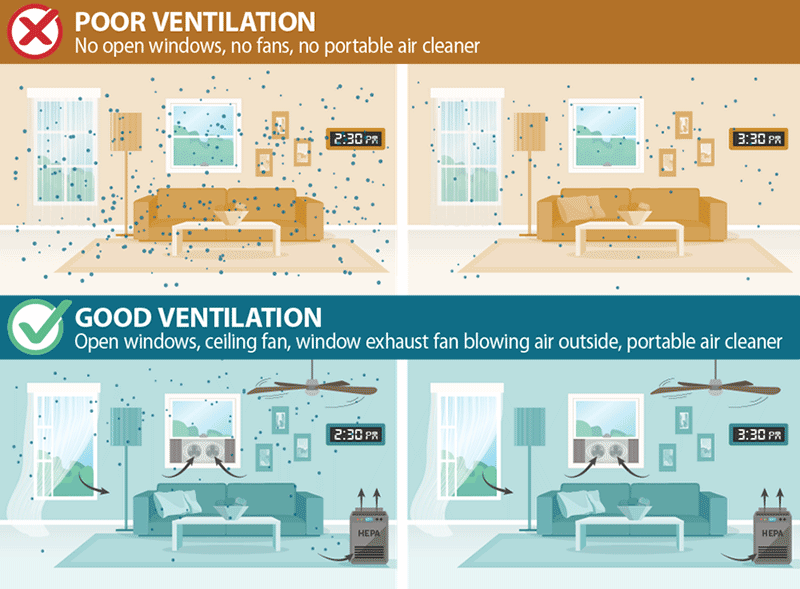
Below are ways you can improve ventilation in your home. Use as many ways as you can (open windows, use air filters, and turn on fans) to help clear out virus particles in your home faster.

Bring as much fresh air into your home as possible. Bringing fresh, outdoor air into your home helps keep virus particles from accumulating inside.

  • If it’s safe to do so, open doors and windows as much as you can to bring in fresh, outdoor air. While it’s better to open them wide, even having a window cracked open slightly can help.
  • If you can, open multiple doors and windows to allow more fresh air to move inside.
  • Do not open windows and doors if doing so is unsafe for you or others (for example, presence of young children and pets, risk of falling, triggering asthma symptoms, high levels of outdoor pollution).
  • If opening windows or doors is unsafe, consider other approaches for reducing virus particles in the air, such as using air filtration and bathroom and stove exhaust fans.
  • Use fans to move virus particles in the air from inside your home to outside. Consider using a window exhaust fan if you have one. Be sure it is placed safely and securely in the window. Another option is to place a fan as close as possible to an open window or door, blowing outside. Don’t leave fans unattended with young children.

Filter the Air in Your Home

If your home has a central heating, ventilation, and air conditioning system, (HVAC, a system with air ducts that go throughout the home) that has a filter, do the following to help trap virus particles:

  • In home where the HVAC fan operation can be controlled by a thermostat, set the fan to the “on” position instead of “auto” when you have visitors. This allows the fan to run continuously, even if heating or air conditioning is not on.
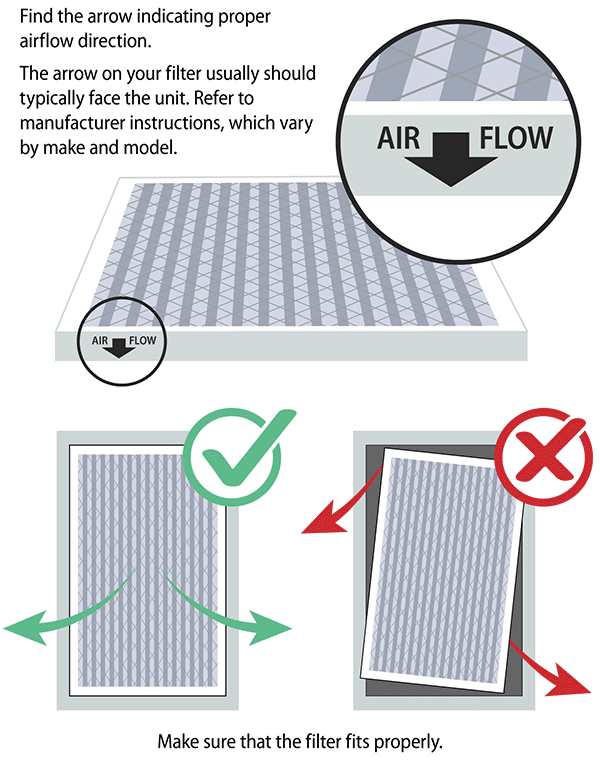
  • Use pleated filters – they are more efficient than ordinary furnace filters and can be found in hardware stores. They should be installed initially within the HVAC system by a professional, if possible. If that is not possible, carefully follow manufacturer’s instructions to replace the filter yourself.
  • Make sure the filter fits properly in the unit.
  • Change your filter every three months or according to the manufacturer’s instructions.
  • Ideally, have the ventilation system inspected and adjusted by a professional every year to make sure it is operating efficiently.

Turn on the Exhaust Fan in Your Bathroom and Kitchen

Exhaust fans above your stovetop and in your bathroom that vent outdoors can help move air outside. Although some stove exhaust fans don’t send their air to the outside, they can still improve airflow and keep virus particles from being concentrated in one place.

  • Keep the exhaust fan turned on over your stovetop and in your bathroom if you have visitors in your home.
  • Keep the exhaust fans turned on for an hour after your visitors leave to help remove virus particles that might be in the air.

Use Fans to Improve Airflow

  • Place a fan as close as possible to an open window blowing outside. This helps get rid of virus particles in your home by blowing air outside. Even without an open window, fans can imrpove airflow.
  • Point fans away from people. Pointing fans toward people can possibly cause contaminated air to flow directly at them.
  • Use ceiling fans to help improve airflow in the home whether or not windows are open.

Limit the Number of Visitors in Your Home and the Time Spent Inside

The more people inside your home, and the longer they stay, the more virus particles can accumulate.

  • List the numbers of visitors in your home.
  • Try to gather in large rooms or areas where you can stay at least 6 feet apart.
  • Be sure that everyone wears a mask while visitors are in your home. This includes visitors as well as the people who usually live in your home.
  • Keep visits as short as possible.
  • Follow additional recommendations for hosting gatherings.

To learn more information and alternative methods for ventilating your home, please visit

https://www.cdc.gov/coronavirus/2019-ncov/community/ventilation.html.